The Scottish Government has committed to the ambitious target of delivering net-zero by 2045, five years ahead of the rest of the UK. Scotland is exceptionally well-placed to lead the transition to green energy thanks to its abundant natural resources, geographic position, and strong focus on innovation. However, despite successes in wind, hydro, and battery storage, Scotland (alongside Wales) has lagged behind England in solar development, with England accounting for around 70% of the UK’s installed solar capacity
[1] despite having only around 53% of the landmass. This blog explores why this is the case, whether it represents a problem, and how the planning system could better support solar development in Scotland.
Sunshine on Leith?
Scotland has historically built its renewable energy sector around wind and hydro, which investors consider to provide more consistent output given local climate conditions. Combined with lower average solar irradiance than the south of England
[2] — or at least the perception of this — solar has been left in the dark in Scotland.
While no one in Scotland would deny there can be dreich days, the country benefits from long daylight hours in summer, and modern solar PV panels can now operate efficiently in diffuse or lower-light conditions. Solar can pair well with battery energy storage systems (BESS) with BESS improving predictability and reliability — ideal for critical loads. It is also suitable for industrial, commercial and logistics uses including data storage where the operator may want to control their renewable energy generation. An example of this is Edinburgh Airport’s airside solar farm, with aims to provide approximately 27% of the airport’s energy needs – indeed, on several occasions in 2025 the airport operated solely on solar power between 08:30 and 19:00, demonstrating the potential of renewable energy in Scotland
[3]. Despite some challenges compared with sunnier parts of the UK, it is clear that solar development can still be both viable and effective in Scotland.
The recent Future for Solar & Storage Conference in Scotland 2025, held in Edinburgh on 11 November 2025, focused on the potential for solar development in Scotland, and its role in delivering a balanced, resilient renewable energy mix aligned with net-zero targets.
Josh King, Chair of Solar Energy Scotland and Director of GenSource Ltd, emphasised that to cut bills and keep them low, Scotland needs to produce as much home-grown power as possible. Solar Energy Scotland wants the Scottish Government to commit to a minimum target of deploying 4GW of solar energy across Scotland by 2030 and declare an ambitious target of 6GW
[4]. Whilst roof top solar panels will play a significant role in reaching this target, more than half of the expected growth in solar generation will come from solar farms.
Growing solar in Scotland
How is solar development being supported in Scotland?
One key way in which solar is supported in Scotland is through a favourable planning policy position. In 2024 the Scottish Government relaxed permitted development (PD) rights in relation to rooftop solar panels on domestic and non-domestic buildings (subject to conditions e.g. not a listed building or world heritage site etc). This change simplifies the planning process and brings the regulations in line with England.
More relevant to solar farms and other larger-than-domestic solar and storage infrastructure beyond the PD rights referenced above, solar has a favourable policy position in the National Planning Framework 4 (NPF4). These policies include:
-
Policy 1 Tackling the climate and nature crisis states that significant weight should be given to the global climate and nature crises;
-
Policy 5 Soils seeks to protect valued soils for their primary use and lists developments that can be supported on prime agricultural land, including renewable energy as long as the layout minimises use of such land and includes restoration commitments;
-
Policy 8 Green belts states that renewable energy development in the green belt can be supported;
-
Policy 11 Energy provides general support for renewable energy development in all its forms including for solar arrays.
It is clear the planning system aims to facilitate opportunities for solar development, rather than trying to limit development.
This favourable policy position is highlighted by the Scottish Government’s planning application statistics for 2024/25 which show that renewable energy developments (the annual planning statistics do not break down decisions by technology type) pursued under planning have an approval rating of 82.8% and those pursued under energy consent applications have a 96.9% approval rating
[5]. However, recent trends indicate that some types of renewables are much more likely to be refused than others. For example, BESS developments appear to be very rarely refused
[6] whereas planning decisions on solar farms show mixed outcomes. Key reasons for refusals on solar applications are predominantly around development on prime agricultural land (even tough NPF4 provides support for such) and/or sensitive landscapes and the industrialisation of rural landscapes.
Can the existing position be improved?
We consider several routes through which the existing position could be improved.
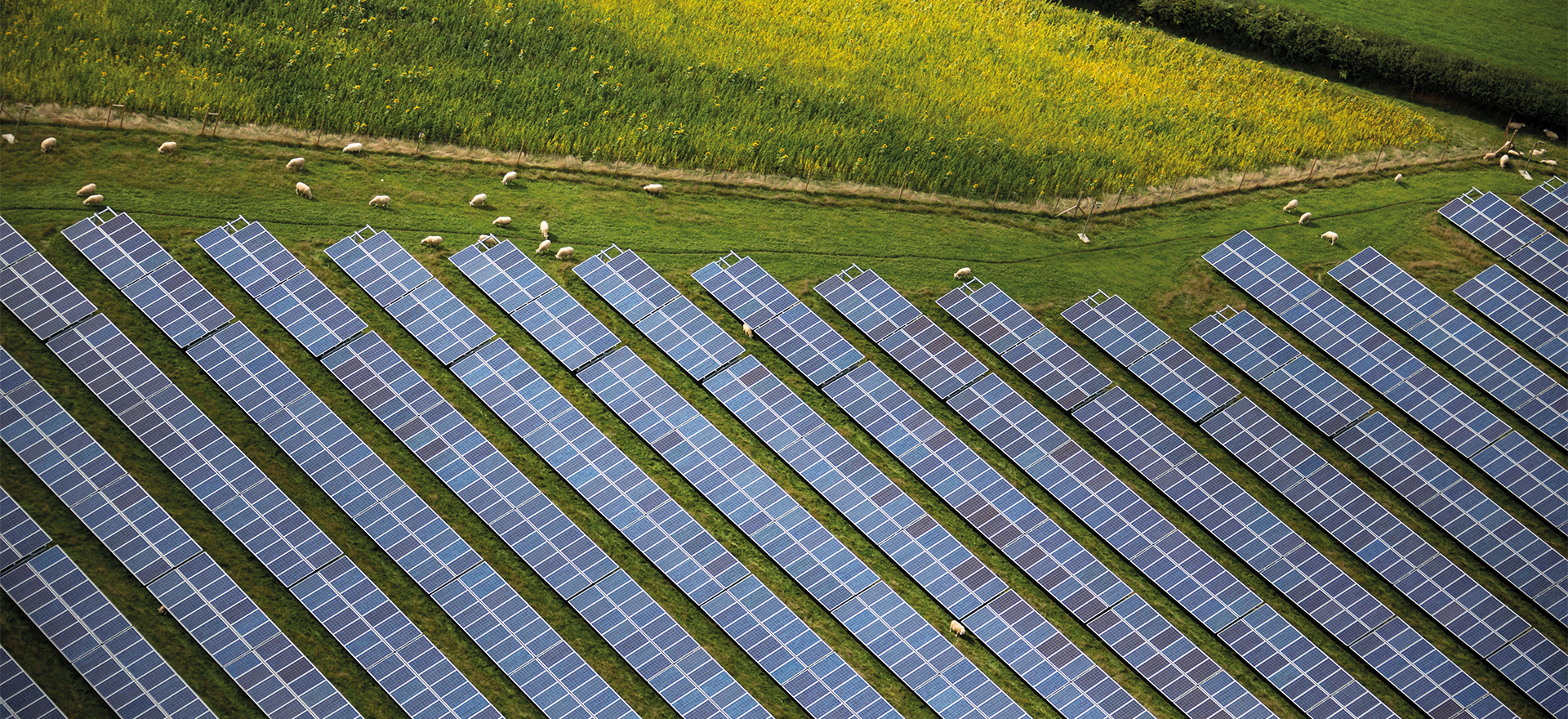
First, the Scottish Government could set out further pro-solar polices which would recognise solar developments as a low impact, biodiversity-friendly technology and suitable for rural locations. Solar and agriculture can be combined through a practice called agrivoltaics, which involves installing solar panels on farmland to produce renewable energy while simultaneously allowing for agricultural use. A successful example of this is Milltown Airfield Solar Farm near Elgin in Moray.
Second, community wealth building could also play a role. Challenges are often raised by local communities in relation to renewable energy developments and, whilst projects may help meet net zero targets, these benefits can feel remote to those local communities living in rural locations, particularly in areas where there is a perception of over-concentration of renewable energy projects. Community benefit funds have been utilised historically for larger-scale wind farms; however, there has been a recent shift in the use of these to include other types of renewable energy developments. These funds result in direct, tangible benefits for rural residents in their own community.
Finally, further information and training for local councillors and communities could improve understanding of how the industry works. Related to the over-concentration point mentioned above, it would be particularly helpful to explain that the number of renewable energy planning applications submitted/approved does not equal the number of projects that will actually be built. This can be for a host of reasons including financing, grid constraints, the approval of connections to the grid and market conditions etc. In this respect, renewable energy developments can differ significantly from other types of development such as housing. Sometimes a number of energy developments will be competing for the same grid connection and so only one will inevitably be built.
Regardless of the planning policy context, grid capacity, congestion and wider energy-storage challenges remain major barriers to all types of renewable energy delivery across the UK. There is improvement on the horizon as grid connection reform is now underway, replacing the old queue for grid access system with a system that prioritises ready-to-build projects.
So is the future bright for Solar developments in Scotland?
Yes it very much is. If you have upcoming solar developments in Scotland or indeed anywhere in the UK and would like to discuss them, Lichfields has extensive experience in solar and wider renewable energy projects — we’d be delighted to help.
Footnotes