When mandatory Biodiversity Net Gain (BNG) came into force in February 2024, it represented one of the most significant environmental changes to the English planning system in decades. The principle of the system was clear – development should leave nature in a better state than it was before. Despite this sizeable shift, most developers supported the change, quickly adapting their working practices to factor in BNG design requirements, costs etc. to their projects.
However, the first couple of years of implementation revealed that in some instances, the system was creating
disproportionate cost, delay and uncertainty, particularly for minor developments. Responding to this, the Government launched an
8‑week consultation last year on improving how BNG is implemented for minor, medium and brownfield development, alongside a separate consultation covering NSIPs*. Following more than 25,000 consultation responses, the Government published its response on Wednesday.
Having reviewed the consultation outcome document in full, the overarching message is clear: BNG is staying, but it is becoming simpler, more flexible and more proportionate. Our reading is that the Government aren’t stepping back from the principles of the BNG system, more it is undertaking a recalibration of where the policy delivers most value. We summarise the key changes below.
Exemptions
The most substantial change is the introduction of a new area‑based exemption (originally announced in December 2025) meaning any development with a red line site area of 0.2 hectares or less will be exempt from BNG, provided no priority habitats are affected. Whilst it is noted that this change could result in a 12% reduction in biodiversity units delivered, the Government considers this change is proportionate to reduce the burden on smaller developers.
The exemption will remove what was often a significant cost relative to scheme size, as well as the need to commission ecological surveys, submit biodiversity gain plans and secure off‑site units for very small impacts. It is important to note that this exemption is measured by the planning red line, not the developable area, making it simple to apply and easy for LPAs to enforce.
Other changes include:
-
The removal of the self-build and custom build exemption (widely viewed as complex, hard to enforce and susceptible to misuse).
-
The retention of the de-minimis exemption (however this is to be reviewed following a separate brownfield consultation – more on this below).
-
Biodiversity-led development where the primary objective is to conserve or enhance biodiversity will be exempt from BNG e.g. habitat creating schemes requiring planning permission.
-
New exemption for parks, public gardens, playing fields e.g. community sports facilities ancillary to existing playing fields (this will not apply to professional sports stadiums or these types of proposals within residential or mixed-use developments).
-
New exemption for temporary development which is five years or less (this only applies where the whole development comprises solely of temporary development).
 Pexels - Altaf Shah
The Government has decided not to proceed with proposals for a blanket exemption for all minor development. Despite concerns that BNG was slowing progress on small sites, the majority view appears to be that a full minor development exemption could lead to substantial cumulative biodiversity loss, particularly in towns and cities. The new area‑based exemption is intended to strike a balance: removing BNG where it is most disproportionate, while retaining it where impacts and opportunities are greater.
No changes to the ‘de minimis’ exemption are currently proposed, with the Government noting that this will be considered alongside the future government response to the consultation on BNG for residential brownfield development. A change to this exemption is still crucial, given there will be certain types of development that have a site area above 0.2 hectares (and therefore not covered by the new area-based exemption) which will have little or no impact on habitat. In these cases the application of BNG is often disproportionate to the benefits.
Other notable changes
Beyond exemptions, the response also makes it easier for developers to ‘go off‑site’, particularly on smaller schemes that remain subject to BNG. For minor development, the biodiversity gain hierarchy will be relaxed so that off‑site delivery is treated equally to on‑site provision. This is a practical change that many developers have requested. For already constrained sites, attempting to make room for marginal on-site gains has often led to questionable design outcomes and long-term management risks. It seems that going forward, we’ll have greater certainty that purchasing off-site units is an accepted and equal option.
The Government has also confirmed changes to the spatial risk multiplier, which affects where off‑site units can be sourced from. Rather than being assessed against local authority boundaries and National Capital Areas (NCAs), the multiplier will be based on Local Nature Recovery Strategy (LNRS) areas – reducing the number of habitat ‘trading areas’ from 337 LPAs or 159 NCAs to 48 LNRS areas.
This change could be fairly polarising. On the one hand, this shift to LNRS based spatial risk will strengthen the link between BNG and strategic nature recovery but could also have negative consequences for landowners with gain sites or BNG providers – some landowners will see greater demand for units whilst others will be cut off from previous clients. For developers, this change could translate to greater availability and improved choice in off-site units.
Brownfield sites
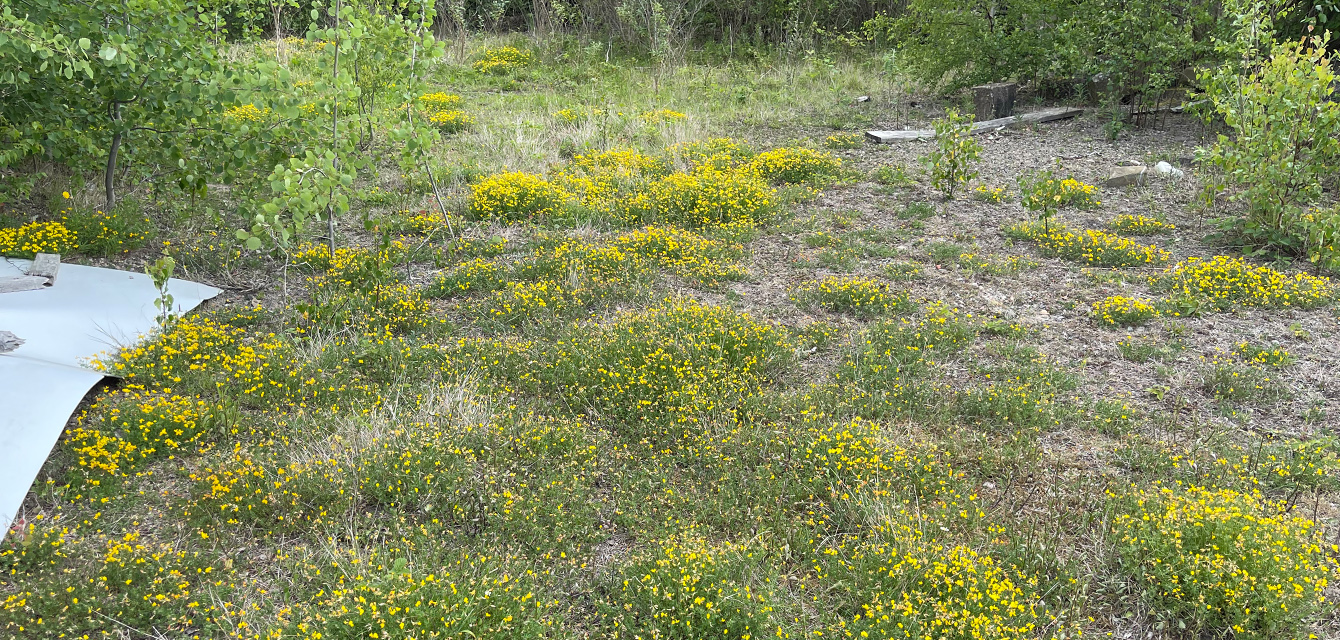
Brownfield development, particularly sites with Open Mosaic Habitat (OMH), has also received targeted attention. OMH has proven difficult to identify, value and compensate for, often creating viability challenges on previously developed land. It’s encouraging to see these long-standing challenges being addressed, with a commitment to make metric and guidance changes for the use of proxy habitats as a suitable alternative to OMH. Metric information, including the definition of OMH, will be updated to assist with clearer identification.
A further consultation
for residential brownfield development is now open and runs until 10 June 2026. It seeks feedback firstly on a definition of brownfield residential development - establishing a clear, operational definition that combines both what constitutes residential led development and what counts as brownfield land. This definition is then applied to a
targeted BNG exemption for brownfield residential development, on sites potentially up to 2.5 hectares, unlocking urban sites where BNG requirements have previously had a significant impact on viability.
Implementation and next steps
In terms of the implementation of the above key changes, this will be phased through 2026. By 31 July 2026 (subject to parliamentary timetabling) secondary legislation will be published to introduce the 0.2 ha exemption, exempt temporary permissions and amend the gain hierarchy for minor development. Until then, existing BNG rules remain in place.
Later in 2026 the other exemptions will come into force, as well as a possible brownfield exemption subject to the outcome of the open consultation.
Overall, the raft of changes proposed is positive. It is clear that the Government has listened to delivery concerns and is willing to make adjustments without undermining its environmental objectives. The proposed changes mean that for minor development schemes, BNG should be simpler and more commercially workable than it was when the system was first introduced.
As always, Lichfields’ in-house BNG team are on hand if you have any queries in relation to the above, are interested in responding to the open Brownfield consultation, or need help with navigating the BNG system more generally. Please get in touch!
*Keep your eyes peeled for an incoming Lichfields blog on the Government’s response to the BNG consultation on NSIPs!