Planning matters

Our award winning blog gives a fresh perspective on the latest trends in planning and development.

BNG Simplified? Smaller Sites, Fewer Hurdles
When mandatory Biodiversity Net Gain (BNG) came into force in February 2024, it represented one of the most significant environmental changes to the English planning system in decades. The principle of the system was clear – development should leave nature in a better state than it was before. Despite this sizeable shift, most developers supported the change, quickly adapting their working practices to factor in BNG design requirements, costs etc. to their projects.
However, the first couple of years of implementation revealed that in some instances, the system was creating disproportionate cost, delay and uncertainty, particularly for minor developments. Responding to this, the Government launched an 8‑week consultation[1] last year on improving how BNG is implemented for minor, medium and brownfield development, alongside a separate consultation covering NSIPs*. Following more than 25,000 consultation responses, the Government published its response on Wednesday.
Having reviewed the consultation outcome document in full, the overarching message is clear: BNG is staying, but it is becoming simpler, more flexible and more proportionate. Our reading is that the Government aren’t stepping back from the principles of the BNG system, more it is undertaking a recalibration of where the policy delivers most value. We summarise the key changes below.


Exemptions

The most substantial change is the introduction of a new area‑based exemption (originally announced in December 2025) meaning any development with a red line site area of 0.2 hectares or less will be exempt from BNG, provided no priority habitats are affected. Whilst it is noted that this change could result in a 12% reduction in biodiversity units delivered, the Government considers this change is proportionate to reduce the burden on smaller developers.
The exemption will remove what was often a significant cost relative to scheme size, as well as the need to commission ecological surveys, submit biodiversity gain plans and secure off‑site units for very small impacts. It is important to note that this exemption is measured by the planning red line, not the developable area, making it simple to apply and easy for LPAs to enforce.
Other changes include:
  • The removal of the self-build and custom build exemption (widely viewed as complex, hard to enforce and susceptible to misuse).

  • The retention of the de-minimis exemption (however this is to be reviewed following a separate brownfield consultation – more on this below).

  • Biodiversity-led development where the primary objective is to conserve or enhance biodiversity will be exempt from BNG e.g. habitat creating schemes requiring planning permission.

  • New exemption for parks, public gardens, playing fields e.g. community sports facilities ancillary to existing playing fields (this will not apply to professional sports stadiums or these types of proposals within residential or mixed-use developments).

  • New exemption for temporary development which is five years or less (this only applies where the whole development comprises solely of temporary development).
Pexels - Altaf Shah
The Government has decided not to proceed with proposals for a blanket exemption for all minor development. Despite concerns that BNG was slowing progress on small sites, the majority view appears to be that a full minor development exemption could lead to substantial cumulative biodiversity loss, particularly in towns and cities. The new area‑based exemption is intended to strike a balance: removing BNG where it is most disproportionate, while retaining it where impacts and opportunities are greater.
No changes to the ‘de minimis’ exemption are currently proposed, with the Government noting that this will be considered alongside the future government response to the consultation on BNG for residential brownfield development. A change to this exemption is still crucial, given there will be certain types of development that have a site area above 0.2 hectares (and therefore not covered by the new area-based exemption) which will have little or no impact on habitat. In these cases the application of BNG is often disproportionate to the benefits.

Other notable changes

Beyond exemptions, the response also makes it easier for developers to ‘go off‑site’, particularly on smaller schemes that remain subject to BNG. For minor development, the biodiversity gain hierarchy will be relaxed so that off‑site delivery is treated equally to on‑site provision. This is a practical change that many developers have requested. For already constrained sites, attempting to make room for marginal on-site gains has often led to questionable design outcomes and long-term management risks. It seems that going forward, we’ll have greater certainty that purchasing off-site units is an accepted and equal option.
The Government has also confirmed changes to the spatial risk multiplier, which affects where off‑site units can be sourced from. Rather than being assessed against local authority boundaries and National Capital Areas (NCAs), the multiplier will be based on Local Nature Recovery Strategy (LNRS) areas – reducing the number of habitat ‘trading areas’ from 337 LPAs or 159 NCAs to 48 LNRS areas.
This change could be fairly polarising. On the one hand, this shift to LNRS based spatial risk will strengthen the link between BNG and strategic nature recovery but could also have negative consequences for landowners with gain sites or BNG providers – some landowners will see greater demand for units whilst others will be cut off from previous clients. For developers, this change could translate to greater availability and improved choice in off-site units.

Brownfield sites

Brownfield development, particularly sites with Open Mosaic Habitat (OMH), has also received targeted attention. OMH has proven difficult to identify, value and compensate for, often creating viability challenges on previously developed land. It’s encouraging to see these long-standing challenges being addressed, with a commitment to make metric and guidance changes for the use of proxy habitats as a suitable alternative to OMH. Metric information, including the definition of OMH, will be updated to assist with clearer identification.
A further consultation[2] for residential brownfield development is now open and runs until 10 June 2026. It seeks feedback firstly on a definition of brownfield residential development - establishing a clear, operational definition that combines both what constitutes residential led development and what counts as brownfield land. This definition is then applied to a targeted BNG exemption for brownfield residential development, on sites potentially up to 2.5 hectares, unlocking urban sites where BNG requirements have previously had a significant impact on viability.


Implementation and next steps

In terms of the implementation of the above key changes, this will be phased through 2026. By 31 July 2026 (subject to parliamentary timetabling) secondary legislation will be published to introduce the 0.2 ha exemption, exempt temporary permissions and amend the gain hierarchy for minor development. Until then, existing BNG rules remain in place.
Later in 2026 the other exemptions will come into force, as well as a possible brownfield exemption subject to the outcome of the open consultation.
Overall, the raft of changes proposed is positive. It is clear that the Government has listened to delivery concerns and is willing to make adjustments without undermining its environmental objectives. The proposed changes mean that for minor development schemes, BNG should be simpler and more commercially workable than it was when the system was first introduced.
As always, Lichfields’ in-house BNG team are on hand if you have any queries in relation to the above, are interested in responding to the open Brownfield consultation, or need help with navigating the BNG system more generally. Please get in touch!
*Keep your eyes peeled for an incoming Lichfields blog on the Government’s response to the BNG consultation on NSIPs!

CONTINUE READING

Who should own the value of land? Imperfect answers to a timely question
Buy land, they’re not making it anymore. An enduring cliché, allegedly courtesy of Mark Twain,[1] but its durability as a rhetorical device perhaps explains why land value capture (LVC) remains a perennial topic of debate.[2]
The latest contribution is a new report from the UK Collaborative Centre for Housing Evidence (CaCHE) - “Who should own the value of land? Housing, power and the deep politics of land value capture” by Edward Shepherd and Tim White. It arrives at (yet another) significant moment for planning reform. With the Government actively consulting on changes to viability policy,[3] and grappling with a London development market in acute difficulty,[4] the report’s central questions are not academic.
The report is worth reading. Drawing on analysis of over 100 parliamentary debates and policy documents, and 50 interviews conducted between December 2023 and February 2025, the CaCHE report makes five propositions:
  1. LVC is ideologically ambivalent — a “third way” policy that different political traditions can justify for different reasons. This explains why it has survived successive governments while the detail is contested (Key Finding 1)

  2. This ambivalence produces paradigm stability but constant policy churn, as each government tinkers at the margins rather than confront the underlying tensions (Key Finding 2).

  3. The s.106 negotiations for LVC has generated a “complexity industry” — a professional ecosystem whose expertise is unequally distributed and systematically exploited by well-resourced private interests at the expense of local authorities and the communities they serve (Key Finding 3).

  4. By focusing political attention on development land, LVC has served to contain more ambitious conversations about property wealth taxation more broadly, including homeownership (Key Finding 4).

  5. LVC is no panacea — spatially uneven, structurally limited, and ultimately a mechanism that manages rather than resolves the contradictions of the speculative housebuilding model (Key Finding 5).

The paper creates some well-constructed arguments; on the ideological ambivalence thesis especially and its observation that LVC reform succeeded in the 2010s because campaigners repackaged it in the efficiency language of neoliberalism rather than the redistributive language of social democracy (See Section 8).
Where the report becomes more difficult is in its central empirical claim: that the current viability system is characterised by systematic gaming and manipulation by developers. This finding is based on previously unpublished data (set out within the report's Appendix B) comparing land transaction prices with the figures submitted in financial viability assessments (FVAs) for the same London sites. The headline finding — that prices paid for sites were on average 2,450% higher than the average residual land values (RLVs) reported in those assessments — is presented as “clear and compelling evidence of continuing widespread gaming and manipulation of the system by developers” (Chapter 7, pp. 63–64).
The report goes on to refer to the strength of the structural power of the volume housebuilders, stating that they “are well equipped to navigate the negotiations of the planning process due to their considerable resources – which produces skills and information asymmetries in comparison with local authorities.” (page 28).[5]
Before accepting this diagnosis, and the report’s recommendations, it seems worth pausing on several elements of the analysis.

Does the analysis account for survivorship bias in a declining market?


The Appendix B dataset relies on 41 sites where viability was tested and transacted. Schemes where a viability assessment (either internal or carried out in line with the PPG) might have concluded the development was unviable and nothing happened — precisely the cases where the FVA’s conservatism was vindicated — leave no trace.[6] This is more than a minor methodological crease. The data was assembled between January 2023 and June 2025: precisely the period in which London’s development pipeline was collapsing, prompting the Government and Mayor of London’s intervention.[7] The flow of new homes that secured permission in 2025/26 was just 40% of the number in 2021/22 (see Figure 1). And it seems unlikely all will turn out to be viable: Molior data shows only 2,100 homes were started in Q1 of 2026: a fraction of past rates, and before accounting for impact of the Iran conflict. Meanwhile, 269 of the 300 active development sites will complete by end of 2027, leaving just 5,900 homes scheduled for delivery after 2027, with few sites in the pipeline to replace them.[8]


Figure 1: Homes securing planning permission in London 2012/13-2025/26

Source: GLA London Datastore - Residential approvals dashboard (Accessed 7th April 2026)

The sites in Appendix B are those that transacted in the lead up to this precipitous collapse: a self-selecting group whose economics were sufficiently robust to attract a buyer. The far larger population of sites that stalled, were mothballed, or failed to attract any transaction during this period is inevitably absent. Appendix B cannot capture the land that was bid away to competing uses, or the promoted sites that entered the market and attracted no residential offers.
Financial capital is not sentimental. It flows toward returns and away from unacceptable risk, and in London's residential development market it has been flowing out for some time. Berkeley - the most London-focused major developer in the country - recently announced it is halting new land purchases, having bought just three sites in three years. It stated it does not believe it can make its required rate of return on new London sites, citing the competitive pressure from non-residential uses — data centres, logistics, life sciences — which do not carry the same regulatory and tax burden as residential development and can therefore consistently outbid it for land.[9]

Does it recognise the market realities of acquiring land?


For planning purposes, financial viability appraisal is prepared with reference to a benchmark land value (BLV) that is defined in the GLA’s 2023 viability guidance as the “minimum return required for a reasonable land owner to make the land available for development and should reflect the cost of compliance with planning policy”.[10] The analysis in Appendix B indicates that many sites are transacting at levels greater than BLV, demonstrating that these London landowners are, in reality, requiring a greater price than might be assumed in the viability appraisal, reflecting the expectations arising from other uses. Industrial land values run at £4.75m to £7.75m per acre,[11] with Savills reporting an increase of 175% between 2017 - 2022;[12] Data centre sites have been valued at £17m per acre.[13] The implied value of the sites transacted in Appendix B is £5.1m – £8.5m per acre.[14] London is where there is greatest competition for - and lowest supply of - developable land.[15]
The pressure to acquire land in this environment might mean that developers are “overpaying” compared to a theoretical appraisal BLV, in anticipation that having obtained a planning permission confirming the principle of a certain scale of development, it becomes a baseline to then revert with an optimised scheme or through cost or value engineering. The transacted price may not correspond to the scheme or developer that secured permission. Those acquiring may have a different business models, different financing arrangements, or different development ambitions.
In other words, the transacted price may not be coterminous with the scheme or developer that secured planning permission. The schemes that are identified in Appendix B may never actually be delivered.
Equally, the developer may be pricing in anticipated value growth, or taking a calculated risk that the costs assumed at an early stage - before full technical information is available – can be managed more effectively in delivery. This is no more or less than the ordinary expression of entrepreneurial risk appetite in a competitive market economy. Without it, as the behavioural economics literature is clear, very little development would happen at all.[16]
This is about small margins. The Council’s own viability evidence for Scheme 2 in Appendix B - the Rainbow Business Centre – shows the difference between the price paid (£18.25m) and the benchmark land value of £6.8m is bridged simply by assuming a 10% increase in value and a marginal cost efficiency of around 2-3% for a scheme that would be expected on the market a number of years ahead.[17] The report observes that:
“We note that there is a potential variance in the construction costs due to the early information upon which the cost estimate is based in comparison to the costs when the works are undertaken.”
Of course, if the entrepreneurial optimism is misplaced, the development will struggle to attract finance and the site will stall until (if) the economics of the development improve. The SME builder may fail.[18] And if the developer offers less than the landowner requires, they do not access the land – losing a fundamental input to their business.

Big city - small builders

The CaCHE report constructs its gaming thesis around its analysis of London sites and reference to volume housebuilder behaviour that it refers to as land portfolio companies with structural market power and sophisticated viability teams (see Section 3). But volume housebuilders - although active – have typically delivered a smaller share of London's homes. The capital’s residential pipeline has been characterised by SMEs, specialist brownfield developers, Build to Rent operators and mixed-tenure regeneration vehicles.[19]  This is a market niche for SMEs.[20] A spot check of the Appendix B sites supports that thesis.
Further, as already identified, London is distinct in the competition for land and its shortage of supply compared to any other part of the country.[21]
In reality, the London landscape is a story of SMEs whose market position has reduced and remains fragile – operating across a handful of sites rather than large portfolios; their success or failure in a weak market bound to unpredictable decisions by LPAs and landowners.
If the conceptual framework for ‘gaming’ is built around the power of big volume housebuilders but the empirical evidence is drawn from a much more diverse London market and sites those builders often do not operate in, how confident can we be in the causal story the report tells?
The report states:
"while the evidence collected relates only to London, there is no reason why similar logics are not also shaping developer and land market practice in other areas of the country" (section 7)
This seems a bold assertion – lacking evidence - given that London and the rest of England have structurally different development economics, land markets, and participants.[22]

2,450%: a number so large it should make you pause

The CaCHE report leads with the alleged 2,450% gap between transacted numbers and the viability appraisal RLV as the totemic metric of its diagnosis. It’s worth a pause to ponder its robustness.
The precise calculation is not provided in the report and it is not clear how the analysis deals with mixed uses within schemes. Of minor note, Appendix B contains what appears to be duplicate data for sites 27 and 28 — but this is presumably an error.
Crucially, it does not explain how it handled negative RLVs — sites where the viability submission assessed the land as having nil or below-zero value — in computing the average. Of the 47 sites in Appendix B, 26 (55%) show negative RLVs. The resulting problem is a straightforward one of ratio arithmetic: when the denominator approaches zero from the negative side, percentage comparisons cease to be meaningful. Working from the closest replication of the report's methodology, removing a single large negative-RLV site (Woolwich Central) moves the headline figure not downward but to approximately 7,000%. The 2,450% figure is an artefact of a near-zero mean denominator, and should be treated accordingly.[23]


Are the right conclusions being drawn about the ‘complexity industry’?

Undoubtedly, the testing of viability is complex. That’s because development of urban brownfield sites is complex, with multiple inputs and (inter)dependencies, dynamic over time, and risky. If the state seeks to tax it via s.106 up to a threshold close to what is viable, complexity is inevitable in defining where that threshold lies.
Since 2018, the Planning Practice Guidance has sought greater standardisation and alignment, but it too states: “Complexity and variance is inherent in viability assessment”.
The current policy proposal – consulted on in December 2025 – is for greater standardisation,[24] and the CaCHE report supports it, stating:
“If the current policy settlement is going to be continued for the time being, policymakers should make adjustments in the short-term to ensure that there is greater transparency and standardisation and less scope for negotiation in how land value capture policies are set and applied. We therefore welcome the apparent move towards greater standardisation of viability assessment inputs in the [... NPPF] consultation. Specific measures [...] could include specifying benchmark land value thresholds in policy, creating a robust and transparent national database of development costs, compiling a robust land price database, setting a national minimum and non-negotiable ‘floor’ for the provision of Social Rent housing [...] and making the modelling of price growth in viability testing mandatory.”
A pedant might spot that the CaCHE report endorses the idea of making modelling of growth mandatory, but only for prices; a view that has its own asymmetry at a time when the impact on construction costs of the Iran conflict is top of the agenda.[25] The Government is more balanced in suggesting this also for costs.[26]
But the bigger point is whether the CaCHE report’s central critique that the information asymmetry (between how the developer views viability within their business, and what is written down in a viability appraisal for planning) is leading to lost value capture and that the answer is to standardise viability.  Viewed through any prism, this does not work:
  1. For reasons already explained, a system in which developers were running rampant in London, merrily overpaying for land at the expense of value capture, and then making super-profits would not look like the current market in London. Imagine it were: finance would be rushing into residential development, SMEs would be increasing in numbers, the big volume builders would be buying more land in London. We might even be building more homes. Self-evidently, that ain’t happening.  

  2. Standardisation for a planning viability assessment means what it says. Under current PPG guidance, build costs are benchmarked against BCIS averages or equivalent; finance costs are modelled on standard assumptions about interest rates. Profit thresholds are set with reference to market norms (the 15-20% on gross development value range that has become a planning convention). These inputs are deliberately intended to provide a common framework for negotiation, not to replicate the specific economics of any individual developer or any individual scheme.[27]

  3. But every developer, site and project is different and time sensitive, especially so in London. This inevitably colours the internal appraisal. The land costs reflects the bid necessary to secure the land from owners who have expectations and choices. Build costs reflect the developer's own supply chain, its approach to procurement, the specific ground conditions and abnormal costs of the site, and the current order book - a contractor who is busy will tender at a higher cost than one who is not. Finance costs reflect that developer's actual cost of capital, which may be substantially higher - or in some cases lower - than the planning convention, depending on the lender’s pricing of risk or the internal capital allocation within a larger group. Profit thresholds reflect not an abstract market norm but the hurdle rate requirement of that developer's investors or board — which may be higher than the planning benchmark if the site is perceived as risky, or if the developer is operating under financial pressure. Certain homebuilders might have pricing strategies and incentives and assumptions around sales rates that can vary enormously, often in a short period of time. And so on.

  4. This isn't gaming so much as the ordinary operation of a complex market in which different actors have different skills, cost structures, financing arrangements and appetites. A standardised model cannot, by design, distinguish between a developer whose internal appraisal diverges from planning benchmarks because they are ‘gaming the system’, and one whose divergence reflects legitimate differences in how they actually operate.  
There is a useful analogy in car manufacturing.
Imagine a government regulator (OFVROOM?) instructed every car manufacturer to calculate residual value using standardised inputs: average steel costs, average assembly hours, a standard return on capital. Volkswagen — high-volume, shared platforms, standardised supply chains — might sit closest to the assumptions. Skoda, lower specification within the same group, might find its costs overstated. Porsche, aluminium-intensive with bespoke engineering and premium values, would find them understated. Morgan, building 650 cars a year by hand in Malvern, would find the model almost entirely inapplicable.[28] China’s BYD, vertically integrated with different capital structures and a penetration pricing strategy, would be a category it was never designed to assess.[29]
Observing that transaction prices far exceeded the model's residual values, OFVROOM concludes compelling evidence of widespread manipulation — two sets of books, one for the regulator and one for the market. It would be nothing of the kind. It would be evidence that a standardised model produces accurate outputs only for the ‘average’ manufacturer, and increasingly divergent outputs the further any individual departs from that mean. The divergence is a feature of the model, not a bug. Tightening standardisation would increase it for Morgan and BYD while proving no more accurate for anyone else.
This is the risk of December 2025 consultation reforms to viability if applied to London’s heterogeneous development market. ‘Tax’ at the margins of viability in that standard model, and the already diminished industry could shrink further.


Do the answers lie in Europe? (terms and conditions apply)


The report points to German and Danish models as evidence that more interventionist approaches to land value capture are achievable (section 11). This idea is well trodden ground.[30]
The question is not whether an interventionist approach to land value capture can work and should be applied: the UK has the tools to do so by virtue of its Development Corporations, Homes England and CPO powers. It has and will continue to apply these tools, notably for large scale regeneration sites and New Towns.[31]  
The nub is whether it is realistic to cite those models as the answer to what it observes in its analysis of the sites in Appendix B, and whether there are drawbacks to those approaches. Yes, the Danes and Germans – and indeed other European nations - operate models in which the public sector can play a strong role in land assembly or pooling, but the most oft-cited examples are those associated with large-scale regeneration and development: for example Copenhagen’s Ørestad, Nordhavn, Lynetteholmen delivered through the City & Port Development Corporation (By & Havn), a publicly-owned entity that assembles land, provides infrastructure and sells development rights to private developers.[32] These are not analogous to most of the brownfield residential schemes in Appendix B. Nor do they read across to the land use circumstances or political reticence towards development of many local authorities.[33]

The ØRESTAD Development in Copenhagen

For smaller sites, Germany’s Cooperative Urban Land Development (CULD) model has long been admired as a superior alternative to the Section 106 regime — a system that captures land value uplift systematically, fixes affordable housing obligations in advance, and removes the viability negotiation.[34] Yet recent evidence suggests not all in the garten is rosy, with a potential structural vulnerability in the face of economic challenges:
  1. Housing permits (i.e. permissions) have fallen by 46% from 2024 with apartments – the typology governed by CULD - falling most.[35]  Cities with CULD or an equivalent also seem to have experienced a precipitous fall in completions.[36] Permitted schemes are being abandoned as unviable; in 2023 alone, nearly 23,000 permits expired unused, due to becoming uneconomic.[37]

  2. Munich’s own SoBoN model — dating from 1994 – is frequently cited as the international benchmark for CULD. And yet, in practice it has only been applied to 176 projects over 25 years (seven a year) which on the face of it is not huge for a city of 1.6 million people.[38] In 2021, the City raised infrastructure charges and rental quotas, prompting warnings from industry that the reforms would deter the developers responsible for building most of the city’s affordable housing.[39]

  3. Even before then, research by the Technical University of Munich showed the city’s housing supply was inelastic – unresponsive to prices changes – and suggested developers were reticent to invest due “the restrictive nature of local regulations which constrained scope and profitability of new housing ventures.”[40] The non-negotiability that was perceived as CULD’s great virtue in rising markets becomes a weakness in a downturn.

  4. In the face of the decline, in 2024, the City watered down its requirements and Munich’s lead for housing construction welcomed the greater room for negotiation in the process.[41]
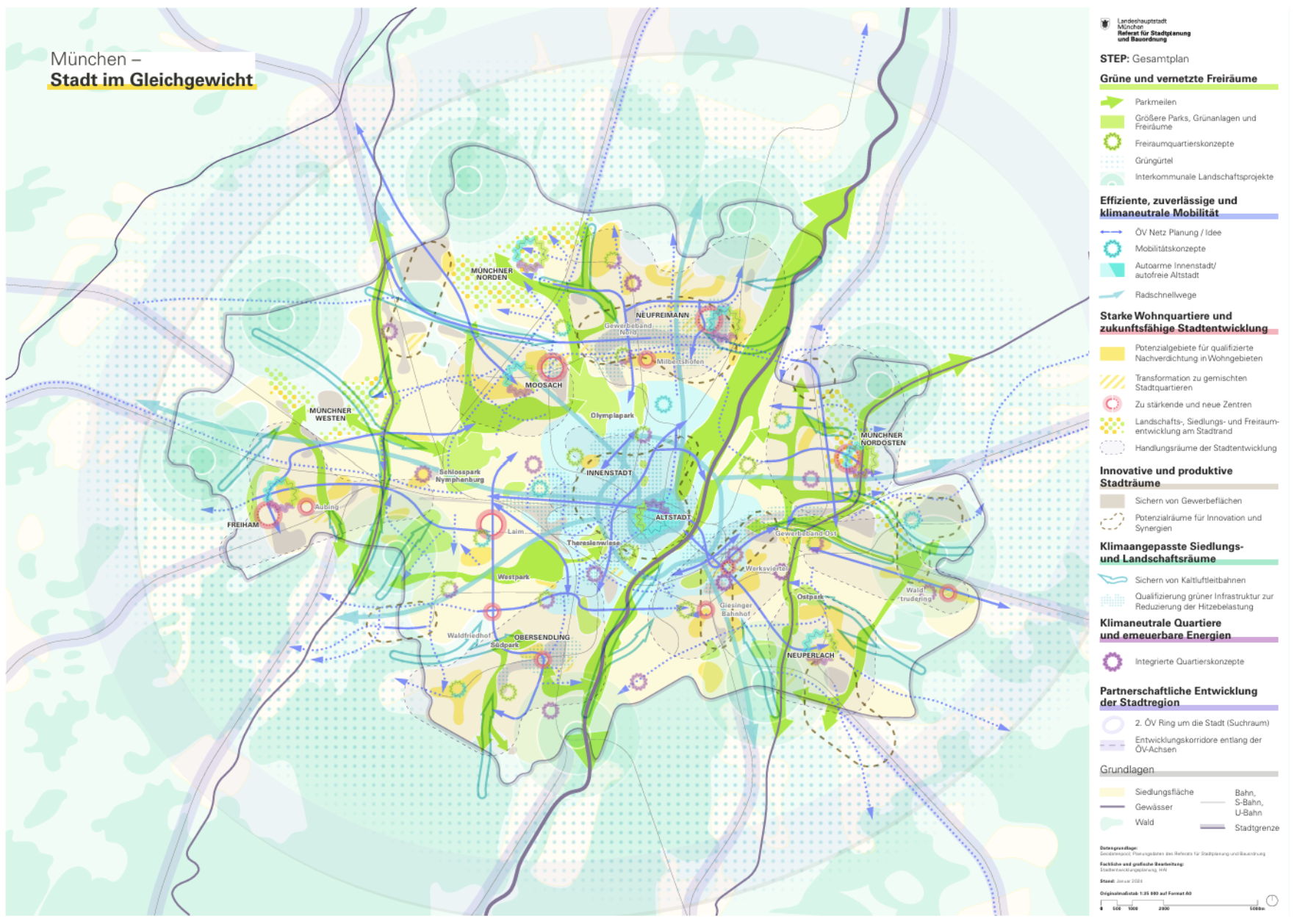
 Munich - City in Balance
Any mechanism which fixes obligations as a share of uplift must grapple seriously with what happens when the uplift disappears and capital to invest in housing is mobile.  The choice between a transparent but rigid system and a negotiable but ‘gameable’ one is not straightforward.

Conclusions: Ruminations on the reality

The CaCHE report is a serious piece of work on a genuinely important subject. Its historical and political analysis is illuminating. But one must pose questions:
  1. The central empirical claim does not really survive scrutiny. The 2,450% headline figure is not a robust statistic, more an artefact of ratio arithmetic applied to a near-zero mean denominator, derived from a dataset that captures only the sites that transacted — the survivors — during the very period in which London's development market was collapsing around them. The absence of the tens of stalled, mothballed and never-transacted sites is not a small omission. It is the whole story.

  2. The gaming thesis rests on a conceptual framework built around dominant volume housebuilder behaviour, tested against a London market to which they make least contribution, with intense competition for land from less regulated alternative land uses, and then adumbrated without evidence to the rest of England. London's development economics, land market and participant base are structurally distinct.

  3. None of this means we would invent the current s.106 and viability system if we were starting from scratch. Its complexity is real, but we need to draw the right conclusions on what this means. If the Government executes its December 2025 ideas - to tighten standardisation further - applied to London's heterogeneous development market at a moment when construction starts are running epically low, it risks producing not more affordable housing but fewer schemes of any kind, acting against the intentions of its recent emergency package.

  4. The international comparators point the same way. The commentariat makes much of European approaches to land value capture, even though the prominent examples relate to very large-scale regeneration projects which make up only part of the London development picture.  Munich's SoBoN — the most frequently cited benchmark for a non-negotiable LVC system on individual sites - was made more onerous in 2021, and then promptly saw its requirements watered down in 2024 in the face of a collapse in supply. It operates in a city where regulatory inflexibility has made housing supply inelastic and developers reticent to build. Non-negotiability - a virtue in a rising market - becomes a liability when the uplift disappears. Any mechanism must grapple seriously with what happens when there is little or no uplift to share in a still competitive land market.
For all its weaknesses, the s.106 system in London has done more work to capture value than is acknowledged: what has broken London's development market is not gaming but inescapable arithmetic — rising costs, competing land uses, a regulatory and tax burden that applies most of all to residential, and a prolonged period in which the economics don’t stack up.  The policy fix involves engaging seriously with those economics, competitive land markets, a heterogeneous development sector and a collapsing pipeline.
The same transactions, the same numbers, the same London sites: viewed through the refracting lens of prior perception seemingly bend towards the predilections any observer brings to the debate. It’s regrettable, but perhaps inevitable. The CaCHE report (and Shelter’s similar analysis) looks through the glass at the data and sees a rigged game. But the market experiences the same data and has to operate within a broken one.  

Footnotes

[1] There is no reliable source linking it to Mark Twain, so is likely apocryphal

[2] Not least the HCLG Select Committee Report October 2025 Delivering 1.5 million new homes: Land Value Capture Third Report of Session 2024–26 HC 672. The report seems to sit awkwardly between two realities: a political desire to capture more value, and a market in which the value available to capture was evaporating before the committee’s eyes.

[3] The December 2025 consultation is here

[4] See the Government and Mayor of London’s Final Package of Support for Housebuilding in the Capital

[5] This mirrors a very similar analysis using some of the same data produced by Shelter (2026) on which Nick Cuff of Urban Sketch produced this critique.

[6] The survivorship bias is compounded by the inevitable limitations of the dataset’s construction: Appendix B draws from 150 transactions of sites with potential for 50 or more residential units, of which 47 (31%) had submitted viability information supporting lower than policy-compliant affordable housing (para 7.4). The sites that transacted without a viability challenge — potentially those where market pricing most closely reflected the PPG’s viability assumptions — are excluded. Most significantly, excluded are the sites that didn’t transact.

[7] With the outcome set out in the Government announcement here

[8] See Molior analysis (April 2026)

[9] Berkeley Group, Strategy and Trading Update, 1 April 2026. Berkeley stated it “does not believe it can make its required rate of return on investment in new land acquisitions” due to “the continuous increase in the tax and regulatory burden on residential development, which other land uses do not experience, allowing them to pay higher land values.”

[10] Mayor of London: London Plan Guidance Development Viability May 2023 Consultation Draft

[11] LSH Taking Stock Industrial & Logistics Market 2026

[12] Savills: The London Land Challenge; The industrial land market, 15th June 2022

[13] Savills Traditional data centre hotspots are changing, here’s why, 12th October 2023

[14] Based on blended transaction prices of roughly £64,000–£86,000 per unit for London brownfield residential sites listed in the appendix B — which at typical densities of 150–250 units per hectare converts to a range of approximately £9.6m–£21.5m per hectare (£3.9m–£8.7m per acre)

[15] The 2016 Evidence Base for the London Plan described competition for land in London as “intense”. This report by Oxford Economics looking at the West London Economy states: “Competition for land is a major issue for West London—and London in general. About 4% of the land in West London is classified as undeveloped or vacant. There is of course more land available for development—residential land that could be densified, industrial land that could be repurposed, or brownfield land. But the effort to increase housing while also providing business space and securing land for industrial and logistics uses inevitably creates tensions.”

[16] See this article in Nature. Its review of behavioural research on real‑estate investment finds that developers are subject to persistent optimism bias, overconfidence, anchoring and confirmation bias, leading them to overestimate future values and their own ability to deliver viability while underestimating costs, risks and constraints. In land markets, these biases translate into developers bidding above fundamentals on the assumption that future market growth, planning flexibility or post‑acquisition adjustments will resolve marginal schemes. The evidence indicates that such overpayment is not anomalous or purely cyclical, but a structural and recurring feature of development decision‑making, reinforced by competitive and institutional incentives rather than corrected by experience alone. See also the analysis by Homes England on Optimism Bias

[17] See Table 5.3.1 of the BNP Paribas Peer Review of the viability assessment for the Rainbow Industrial Estate.

[18] And they are failing in increasing numbers – see this report by WPI strategy reporting the number of SMEs have fallen from “an estimated 12,000 in the late 1980s to fewer than 1,200 today. In 2021/22 alone, 360 housebuilders went bust, a 75% increase from the year before and the highest annual number on record, according to Insolvency Service data obtained by Price Bailey”

[19] London Plan Review: Report of Expert Advisers, January 2024, paras 2.32 – 2.36. Lichfields provided analytical support to the Expert Advisers

[20] This analysis from LSE states: “SME housebuilders tend to take on projects that larger builders cannot. Their ability to take on trickier development sites, whether these are awkwardly shaped, ex-industrial land or extended and repurposed buildings within and beyond urban cores makes them a valued asset. These types of developments are crucial for optimising land use, especially in densely populated areas where land is scarce or constrained by pre-existing structures. Their agility allows them to maximise the potential of small, underutilised plots that larger developers might deem unprofitable or logistically complex.”

[21] The CMA report states: “Overall, we conclude that there is generally a substantial amount of potentially developable land across England, Scotland, and Wales at the regional level, with the exception of London.” (Para 4.49).

[22] In any event, the viability picture across England is also not particularly rosy, as illustrated by Zoopla’s 2025 analysis.

[23] The CaCHE report states at footnote 60 that the RLV comparison is based on n=41, excluding sites where the RLV “could not be reported or inferred.” It does not explain how it handled negative RLVs in computing the average, nor does it report the median or distribution. Working from the closest replication of the report’s own n=41 methodology (which produces approximately 2,540%, within 4% of the stated figure), the mean RLV across those 41 sites is approximately minus £0.75m. On the report’s own formula: removing one site (Woolwich Central, RLV minus £20m) moves the mean figure to approximately 7,000%.

[24] See Appendix B of the December 2025 NPPF Consultation

[25] See this analysis by the chief economist at the Building Cost Information Service (BCIS)

[26] Either way it is a recommendation with problems, as articulated by Philip Barnes here

[27] A point made by Dove J who cited the PPG in saying the preparation of a viability assessment "is not usually specific to that developer and thereby need not contain commercially sensitive data" (See Holborn Studios Ltd, R (on the application of) v London Borough of Hackney & Anor [2020] EWHC 1509 (Admin) (11 June 2020)

[28] As this 2020 Channel 4 documentary demonstrates vividly.

[29] See for example this this 2025 FT article on the impact of BYD’s unprecedented pricing strategy on its competition

[30] See for example this work for the GLA

[31] See for example, the Government’s draft proposals for the New Towns Programme

[32] See this analysis on the City and Port

[33] A more active public sector role – across countless small to medium sites every year - would mean a fundamental re-wiring and different political economy for most English local authorities or creation of well capitalised public sector land promoters. This lies well beyond the current cycle of local government reorganisation, or just expanding the current patchwork of local government housing development companies. There is little sign that anyone has grappled seriously with what a public sector-led model across this canvass (as opposed to the single large-scale schemes) would actually mean. The issues were partly explored in my blog here

[34]Koetter, T., Sikder, S.K. and Weiss, D. (2021) ‘The cooperative urban land development model in Germany: an effective instrument to support affordable housing’, Land Use Policy, 107, 105481. CULD combines a binding land-use plan with a voluntary urban contract under which developers bear the entire costs of development including infrastructure and a mandatory affordable housing quota — typically 30% of new residential floor space. The adequacy framework holds that 70% of the net land value increase funds development costs and affordable housing provision, with 30% retained by the landowner as profit incentive.

[35]Federal Statistical Office (Destatis), building permit data 2021–2024, as reported in REFIRE (2025) ‘Germany’s housing pipeline crumbles as permits plunge to 15-year low’, 30 March 2025

[36]Finexity (2025) ‘Historic low in new residential construction in Germany’, February 2025; Munich saw completions fall 30% year-on-year in 2024, and Hamburg (which reportedly had a more flexible approach to LVC and then tightened it in 2021) recorded a decline of nearly 40%.

[37] Per the 2025 REFIRE article

[38] See this analysis Fittkau (2022) “Munich Model of socially fair use of land: Urban development contracts as an instrument for the creation of affordable housing”

[39] Munich’s 2021 SoBoN reform raised the developer surcharge from €100/m² to €175/m² on average and proposed doubling the rental quota to 80%. Commentators warned the reforms would deter private developers.

[40] Xueying Huang (2024) What Makes Munich’s Housing Shortage A District-Level Analysis of Housing Supply Responsiveness and Urban Planning Metrics Working Paper -School of Engineering and Design, Technical University of Munich

[41] See the interview here (in German)

 

CONTINUE READING

The Planning and Infrastructure Act (‘the Act’)[1] inserts several provisions into the Town and Country Planning Act 1990 aimed at improving the speed and quality of planning decision-taking. While such objectives are not new, legislating for standardising significant elements of the decision-making process is new. Secondary legislation is required to bring the provisions into effect.
This blog focuses on the provisions relating to the proposed ‘national scheme of delegation’ for England, which is out for consultation until 23 April. The Government is consulting on the draft regulations and guidance[2] that allow for and explain the committee reforms provided by the Act. A Government response[3] to the technical consultation (which ran May-July 2025) on the implementation of planning committee reforms has also been published.
The default position will be that planning-related applications will be determined by local planning authority (LPA) officers.
“Committees should focus on the key proposals that matter to an area, enabling other, often more minor and technical, decisions to be made by planning officers”, according to the draft guidance. Committee sizes are to be set to a maximum size of 13.
In this blog, we will set the context and then discuss the proposed delegation schedules.

Why reform planning committees?


Reform of planning committees has been on the Government’s agenda for some time.
The Planning Reform Working Paper on Modernising Planning Committees[4] set out the Government’s initial thinking in December 2024. The Planning and Infrastructure Bill (now ‘the Act’) was published in March 2025. At that time, the policy intent of the proposed legislation reflected the following concerns:
  1. Local planning authority (LPA) schemes of delegation are not clear;

  2. The extent to which officer advice is rejected by members and overturned at appeal;

  3. Planning committees unnecessarily consider policy-compliant schemes on allocated sites;

  4. There can be insufficient understanding among all committee members of planning principles and law; and

  5. There is a lack of transparency around committee decisions and their consequences, and the public is not aware of the cost decisions being awarded against LPAs who lose planning appeals[5].

There is clearly appetite within Government to make planning committees more efficient, to ensure that the focus is on applications that warrant member input rather than schemes that are policy compliant. As set out in its May 2025 consultation, the Government intends to strike a balance by reserving committee input largely for “controversial or complex applications” which would make a “lasting impact on the community”. While the Government has stressed the integral role of planning committees in providing local democratic oversight of planning decisions, it is clear that they are unhappy with the status quo.
The intention is for planning committees to be able to focus on applications where local democratic oversight is required and to empower planning professionals to make sound planning decisions on those cases aligned with the development plan.

What does the legislation provide for regarding committee decisions?


As identified in Rachel Clements’s blog Reform and order: What next for planning committees?, the Act gives the opportunity for the Secretary of State (SoS) to use regulations to undertake the below:  
  1. Make provision for training of members of LPAs and Mayors (or those decision-making on their behalf) in their exercise of specified planning functions (sitting on planning committees) and those who may exercise relevant mayoral planning functions.

  2. Provide for satisfactory completion of the training by an accredited trainer, to be evidenced by a ‘certificate of completion’. For those sitting on planning committees, this must be published on LPA websites. Without this certificate, members of the LPA would be prohibited from exercising planning functions on behalf of the LPA.

  3. Require an LPA to make arrangements for planning functions to be discharged by a committee and prescribe the terms of the arrangements which may include exemptions, variations and discretion (setting criteria for what types of application go to planning committees, but seemingly with room for LPA discretion in its application).

  4. Prescribe the size and composition of a committee or sub-committee which serves planning functions.
The regulations, now published in draft[6] (The draft Town and Country Planning (Discharge of Local Planning Authority Functions) (England) Regulations 2026), will address items 3 and 4. On training and certification of committee members (items 1 and 2), the consultation response notes that, while the priority is to implement the national scheme of delegation and committee reforms first, the Government continues to recognise the importance of effective mandatory training for planning committee members and still aims to implement a creditable and cost-effective training system.

Committee size

In its May 2025 consultation, the Government indicated that it would set a maximum committee size of 11 members, with guidance that smaller committees may work better in some local contexts and set out its intention for a national certification scheme for members. The latest proposals, in the March 2026 draft regulations, have set out a maximum of 13 members for committees, which the Government views as “setting the right balance between fair political representation and ensuring resilience in the decision making function whilst achieving the policy aims of creating smaller more professional committees”.
The ‘Draft guidance for Local Planning Authorities in England’[7] (‘draft guidance’) confirms (at paragraph 28) that 13 committee members is a “maximum figure to accommodate local planning authorities where members are from multiple political parties. Local planning authorities should consider whether a smaller number of members would be more appropriate in their area to support effective decision making”.

Default delegation schedules


The Government is sticking with its May 2025 proposals for a two-tiered approach at the foundation of a national scheme of delegation which will provide “greater clarity and consistency about the role of planning committees in planning decision making”, according to the draft guidance.
Two Schedules of delegation are proposed. Schedule 1 includes applications that will always be delegated to officers and will not be considered at planning committee. Schedule 2 includes applications that will be delegated to officers by default, unless the nominated officer (usually the Chief Planner) and nominated Member (usually the Chair of Committee) decide that applications should be determined by Committee. The Government has named this the ‘gateway test’, the operation of which will be described in statutory guidance to accompany the regulations, the draft guidance being discussed further below.


Default delegation Schedules and linked applications
Schedule
Delegated to officers?
Application type
1
Always
Householder application
Minor commercial applications
Minor residential applications[8]
Reserved matters applications (only unphased schemes)
Applications for s96A non-material amendments
Applications for the approval of conditions
Applications for approval of the Biodiversity Net Gain (BNG) Plan
Applications for prior approval or a determination as to whether it is required (related to permitted development rights)
Lawful Development Certificate applications
Certificates of Appropriate Alternative Development applications
Applications for Permission in Principle
Application to modify or discharge a s106 obligation, where it is connected to a Schedule 1 approval
2
By default, unless the Chief Planner and Chair of Committee decide it should go to Committee based on meeting statutory criteria ‘the gateway test’
Application for listed building consent, applications to vary a listed building consent and any planning application connected with these consent types
Application for planning permission that is not a householder, Minor Commercial or minor residential[9] application
Section 73 application
Section 73A (retrospective) application
Application to modify or discharge a s106 obligation, where it is connected to a Schedule 2 approval
Reserved matters phase application
Advertisement consent application
Tree preservation order applications
Review of mineral planning conditions
Any application from the local authority, a councillor, or officer
2 – in due course
 
Medium residential development
Section 73B applications
Linked- person application
Can be determined by officers. Alternatively, the nominated member and nominated officer may refer it to a committee
An application made by or on behalf of an authority, a member or officer an authority or entity owned or controlled by the authority, its members or officers, to the same authority, whether jointly with another person or not.
For applications to be considered at planning committee, they will need to fall within Schedule 2 and there will need to be agreement between the chief planner and the chair of planning committee (or other nominated officer or Member) that consideration of the application at planning committee is required.


Planning applications for a change of use or for a change in the number of units within a building will fall within Schedule 2. Planning applications for changes to Class E buildings that involve change of use, change in the number of units, development above ground floor level and/or that would increase floorspace, will also fall within Schedule 2.


One amendment following the previous consultation is that only reserved matters applications relating to non-phased outline permissions are included in Schedule 1 in the draft regulations. This reflects concerns in the consultation responses that reserved matters applications can relate to large scale phased development taking place over many years and can represent substantial major development which requires a greater level of scrutiny. The consultation document seeks further views on which Schedule reserved matters applications should be designated to.
A consequence of this approach could be that any scheme that comprises a demolition phase and solely one other phase of development may end up being determined at planning committee. It may be that a more nuanced approach is needed to avoid instances of straightforward, policy compliant, phased reserved matters schemes being taken to committee unnecessarily, if politicians seek to push them through the ‘gateway test’ (discussed below).
The draft National Planning Policy Framework (December 2025) proposes to introduce a new ‘medium development’ category for schemes of 10–49 homes on sites of up to 2.5 hectares. The Government has determined that, if this category is taken forward, these applications should go in Schedule 2.
The Government also outlined that they consider any application for listed building consent, advertisement consent and for consent under tree preservation orders that could potentially raise sensitive issues which would benefit from committee scrutiny and thus should be in Schedule 2.
Permission in Principle applications have been added to Schedule 1.
It is not immediately clear in the draft Regulations how applications not listed in either schedule, e.g. Hazardous Substances Consent applications, will be dealt with. However, the guidance explains that, where a planning function is not listed in either Schedule 1 or 2, it is for the local planning authority to decide, with reference to its local constitution, whether the application goes to committee or not. It also notes:
“Under the national scheme of delegation, current practices set out in local authority constitutions, such as the power for ward councillors to require cases to be called in for committee consideration or having trigger points for referral to committee if a certain number of objections is reached, will not be possible. Local authorities will need to amend their constitutions to align with the national scheme of delegation”.
The draft guidance notes that the overriding presumption is that the applications listed in Schedule 2 will be delegated to officers and can be referred to a committee or sub-committee only where:
  1. at least one of the criteria in regulation 5(2) is met or it is an application made by or on behalf of a local authority, a member or officer of that local authority or an entity owned or controlled (whether wholly or partly) by that authority or any of its members or officers (regulation 6); and

  2. the nominated officer and nominated member of the planning committee agree to the referral.


Gateway test: criteria which must be met before a case can be considered for referral


Draft Regulation 5(2) sets out the criteria for referral to committee, one of which must be met (our bold):
“The nominated member and nominated officer may agree to refer a proposal to determine a Schedule 2 application to a committee if in their view the proposal raises -
(a) one or more issues of economic, social or environmental significance to the local area, or
(b) one or more significant planning matters having regard to the development plan and any other material considerations”.
The draft guidance refers to (a) above as Criteria B and to (b) above as Criteria A.
Accordingly it says, for the purpose of Criteria A, the following circumstances are unlikely to raise a significant planning matter:
  • Where the application for development broadly complies with a detailed site allocation and other relevant policies set out in a local or neighbourhood plan and national decision making policies set out in the National Planning Policy Framework. Significant planning matters may arise if new material considerations are raised by the application;

  • Where a specific planning matter (e.g. highways or flood risk) was initially raised by a statutory consultee as a concern, but the development proposal has been modified to make it acceptable in the view of the statutory consultee (unless the nominated officer has compelling reasons to consider otherwise).
For Criteria B, it will also be for the nominated officer and member to assess whether the application raises a significant economic, social or environmental issue for the local area. The guidance gives these examples:
  • an application for outline planning permission for a large multi-phase residential development allocated in the local plan;

  • an application for planning permission for change of use of a community shop in a rural area;

  • an application for planning permission or listed building consent for changes to a notable listed building in a town centre.
The guidance confirms that it is for LPAs to determine how best to consider cases for referral to committee and includes guidelines on how best to organise staff cover in the case of absence of the nominated officer, to avoid delays in the referral process.


Authority ‘Linked-Person’ Applications


When an authority is itself the applicant, or if any members or officers are the applicant, an application can be referred to committee without consideration of the criteria set out in regulation 5(2), because there is to be a Regulation (6) dedicated to these ‘linked-person’ applications. When no referral is made, then the application can still be determined by an officer.  The decision on whether or not to make a referral should be made with reference to the statutory guidance.


Summary

The Government is consulting on the draft regulations and guidance[10] that allow for and explain the committee reforms, which is out for consultation until 23 April.
The most notable change since the previous Government consultation is to the national scheme of delegation’ for England and specifically the content of the two Schedules within it. Unphased outline and reserved matters applications continue to be proposed in Schedule 1 delegation, but phased reserved matters applications are now proposed to fall within Schedule 2 - albeit further views are being sought on this categorisation.
The Government’s consultation response notes a concern on how the ‘gateway test’ will operate, given its potential for subjective decision making and the need for transparency on which applications are referred to committee. Whilst the Government has provided guidance on how this test will work, there is still an element of subjective decision making that will undoubtedly unsettle applicants. It may take time for developers and all stakeholders to gain a real sense on what type of applications will be considered at planning committee in the future.
The Government wants to streamline the planning process and improve decision-taking and the reform of planning committees is one mechanism to help achieve this.
Further to this and as detailed in this blog, the Government has taken steps[11] to ensure that, where a LPA intends to refuse planning permission for a housing scheme of 150+ dwellings, they must consult the SoS on that application. The Government has also published a consultation[12] on new requirements to consult the SoS where LPAs are minded to refuse planning permission for commercial development with a floorspace of 15,000m2 or more. The aim of these moves is to ensure that large scale, strategic developments are considered for potential call-in, to help with the Government’s priority of promoting economic growth.
The Government’s priority is to implement the national scheme of delegation and committee size reforms first. We expect details on how planning committee members will be trained and certified to come forward later.

Next steps

The short consultation on the draft planning committee reform legislation concludes on 23 April 2026. The consultation notes that the Government are seeking to lay the regulations in draft for consideration by both Houses of Parliament in the Spring.
The current draft Regulations identify 30 September 2026 as the date the Government intends the regulations to be in force to enact this element of planning committee reform.

Footnotes
[1] Planning and Infrastructure Act

[2] Planning committee reform: draft regulations and guidance - GOV.UK

[3] Reform of planning committees: technical consultation - government response - GOV.UK

[4] Planning Reform Working Paper: Planning Committees, first published December 2024

[5] Albeit a March 2026 Sky News story has covered this

[6] The draft Town and Country Planning (Discharge of Local Planning Authority Functions) (England) Regulations 2026

[7] Draft guidance for Local Planning Authorities in England

[8] This is a new definition, see draft ‘The Town and Country Planning (Discharge of Local Planning Authority Functions) (England) Regulations 2026

[9] This is a new definition, see draft ‘The Town and Country Planning (Discharge of Local Planning Authority Functions) (England) Regulations 2026

[10] Planning committee reform: draft regulations and guidance - GOV.UK

[11] Town and Country Planning (Consultation) (England) Direction 2026

[12] Consultation- Consulting the Secretary of State on planning decisions 

CONTINUE READING

Counting the cost: proposed default national application fees

Counting the cost: proposed default national application fees

Jennie Baker, Harry Payne & Steven Butterworth 02 Apr 2026
Draft default national planning application fees have been published by the Government (MHCLG) for consultation, as part of the route for optional localised fees[1]. These application fees are higher than is the case now and, in due course, local planning authorities could charge even higher – or lower – fees.
This is only a first step towards ‘national default’ fees. There are several questions regarding further changes that could be made under the “scope for fundamental reform”. This might include fees reflecting the nature of a site and/or the number of phases of its development.
The consultation sets the context for a further uplift in application fees. Even after recent fee increases and the annual index linked increased are taken into account: “there remains a substantial gap between fee income and service costs. In 2024/25, the annual shortfall is estimated to be around £330 million”.
In addition to proposed cost recovery-based fees, the consultation questions the future of Planning Performance Agreements, pre-application advice and other discretionary charging regimes, given the other changes to fees proposed.
The inclusion of a question on fees related to changes to schemes - for section 73 (s73) and future section 73B (s73B) applications – indicates that the introduction of s73B is still some months away, despite having been acknowledged as necessary by the last Government more than 4 years ago, when drafting the Levelling Up and Regeneration Bill.
Even further away is the introduction of a surcharge for statutory consultees, which will be consulted on again. The current consultation simply asks whether a working proposal of 10% of the national default fee is agreeable and says it will not apply in relation to local plans and Nationally Significant Infrastructure Projects.
 
We review the main elements of the proposals below.


Close to cost recovery – the biggest uplifts
The proposed fees are set out in the consultation, and compared with the equivalent fee currently applicable (since 1 April) see here. A summary table of some of the proposed fees and the percentage uplift is at the end of this blog.
The national default fee schedule proposed (i.e. the ‘draft fee schedule’) has been designed to reflect 90% of the estimated costs of determining applications.
As discussed in our blog 'Take notes: localised planning fees a step closer’ the draft fees have been informed by a PAS National Planning Fees Survey sent to each LPA, in August 2025. The purpose of the survey was to collate planning teams’ views on how well current planning fees reflect the actual cost of processing applications and to identify where the biggest cost recovery challenges lie.
The survey results showed: “no planning fee fully covers the cost of determining a planning application, with shortfalls ranging from 18% for the least underpriced to 60% for the most underpriced”.
The consultation summarises: “The proposed increases vary according to the current shortfall for each application type. For example, to achieve 90% of the estimated cost, the increase for householder applications for the enlargement, improvement or alteration of an existing dwellinghouse is £27, around 8% of the fee as indexed from 1 April 2026. For major section 73 applications, the increase is more significant at £1,074, around 52% from the fee as indexed from 1 April 2026. The maximum application fee would increase by around 25% from £427,537, as indexed from 1 April 2026 to £513,512. The national default fee would continue to be uplifted annually in line with inflation to maintain its real value over time”.
There are some proposed changes to fee increments between different scales of development and types of application, so that a direct comparison is not possible for all applications. Very broadly speaking, the fee uplifts proposed are around a fifth, but there are big variations. For example, advertisement consent fees are proposed to increase by circa 10% and Certificates of appropriate alternative development (CAAD) fees by more than 200% – both of these currently carry a relatively low fee.
Fees for the discharge of conditions, outline planning applications for larger schemes and sites, minerals and waste related applications and other operations are proposed to increase by more than a third. In terms of the biggest increases in actual monies paid, as opposed to percentage uplift, this will obviously be paid by the largest schemes seeking outline or full planning permission (see table at the end of the blog).
The consultation asks whether any of the application fees proposed are unrepresentative.
 
Fees for applications to ‘amend’ a scheme
The proposed fees for s73and s73B applications are included in the consultation. S73 applications are applications for planning permission without compliance with conditions previously attached – i.e. the removal or variation of conditions. S73B applications, not yet available, will permit ‘not substantially different’ planning permissions to those originally granted.
The intention is that both s73 and s73B applications will carry the same fee. This is intended to remove any perverse incentives, simplify user choice between routes and – critically where the Government wants to push for one route over the other -“facilitates appropriate migration to section 73B where material variation will be the better procedural route”.
S73 applications have often been criticised for carrying too low a fee, given that the changes that can be approved via a s73 application can required detailed scrutiny. Therefore, it is not surprising that they will see the biggest percentage fee uplift of the planning application types, at more than 50%.
The consultation asks whether the existing 3-band fee structure is suitable for both s73 and s73B applications, in terms of varying workload – and whether s73B should have the same fee.
 
Discharge of condition – pay per condition?
LPAs have told the Government that discharge of condition application fees should be a priority for review. For non-householder discharge of condition applications, fees are proposed to increase from £309 to £435. In addition, the Government asks whether fees should be charged for each condition, not for each application (which might relate to several conditions). A separate (read higher) fee for the discharge of biodiversity gain plans is also being considered.
 
New fees for applications to modify a s106 agreement
A fee for applications under s106A to modify a s106 agreement is being considered. This does not currently attract a national fee, although it is noted that fees are sometimes charged locally. Views are sought how much such a charge should be.
 
Other application fees – but not for listed buildings or trees
Some other proposed fee changes include changes to the fee structures for applications for agricultural development and for applications for permission in principle. Also, all prior approval applications that currently attract no fee should have the same flat fee of £310. Other prior approval applications will see an uplift.
The consultation advises: “We are not proposing to introduce national fees for applications for listed building consent or works to protected trees”.
  
Changes to what ‘band’ a given size of application falls into
According to the Government, LPA feedback has been that the current fee structures for planning applications for new buildings are confusing.
The new fees proposed would change the fee bands so that they reflect the proposed medium sized residential development category, but this is only a change from 50 to 49 units in the second band of fees for full applications for dwellings. 
More notable is the removing of baseline fees within the fee bands for the largest developments and sites, so that the whole fee relates to the number of units, sqm or hectares, rather than starting at an initial figure for each band. 
However, the biggest suggested shift, not shown in the proposed fees table, is the Government asking whether fixed fees within a given range of development size (e.g. the same fee for anywhere between 50 and 99 dwellings) would offer “a more practical, predictable and proportionate approach”
It would not be more predictable (does one predict a fee?). And while it might be easier to understand, its relationship with the cost recovery sought by the Government is questionable.
 
Not like they used to be – costly details at outline stage
The consultation notes that: “[…] outline applications for major developments now often require significantly greater levels of assessment than in the past, and many of the larger outline applications are now for complex multi-phase developments. LPAs must review many detailed technical statements, undertake extensive statutory consultation, and continue to process related reserved matters applications over many years”.
The time spent considering complex multi-phase applications is arguably recovered by the reserved matters fee and, in many instances, will be addressed by a Planning Performance Agreement (PPA).
‘How long is a piece of string’[2], Lichfields’ 2025 report for the LPDF and Richborough regarding the timescales for securing outline planning permission for housing between 2014 and 2024, provides analysis on the timescales for assessment pertaining to different scales of development. 
One of the report’s key findings was that, in the ten years to 2024, average timescales for determining a major outline application (i.e. for 10+_homes) increased by a year and four months, while the volume of decisions was a third of what it had been. In that period, the number of submitted applications of that type has fallen by three quarters and, in 2024, averaged just two per LPA.
The report concluded: “The average (mean) time taken for determination has risen rapidly even as the number of submitted and determined applications has fallen dramatically over the same period. Whilst resources in planning teams have reduced over this period, the fall is seemingly not to the same extent [as the drop in the number of decisions], implying that the lengthening of determination periods is not solely due to an increased caseload per officer, but other factors such as complexity, increased policy or statutory consultee requirements and/or reduced productivity”.[3]
The report also found that: “As recently as the early 2000s, outline applications could be focused on the principle of development, with simple red line plans and a description of development. It may not be possible to return to those days, but there has certainly been ‘detail creep’”
The report recommended: ‘Scale back the detail: Let outlines be outline’; scaling back and simplifying policy tests, and thus the evidence required at outline stage, especially for small and medium sites.
Considering the need to scale back outline planning application submissions – indeed all application submissions - and to stop the erring towards requiring submission of additional documents in order to validate applications, should be addressed before the complexity of assessment processes is recompensed.
However, simplifying the system and the number of documents required is not presented as an option. The proposed national planning policy framework (NPPF) makes a start, saying: “Local validation lists should only include additional information requirements if there is a policy in the development plan requiring a specific further assessment. Any such additional information requirements should not be applied equally to all applications but should be proportionate to the scale of development and its potential impact. Where appropriate, the requirements should clearly distinguish between what is required for major, medium and other types of development proposal”.
But the associated national policy consultation[4] acknowledged that amendments to legislation might be needed for this to have effect (given validation checklists are legislated for). Validation checklists will continue to make demands about documents that might be needed, which then need to be consulted upon and then need to be considered in an assessment.
  
Complexity costs
In a different approach, to Government is considering quantifying complexity. The Government says that outline planning application fees, based on site area do not reflect the complexities arising from site characteristics. It provides an example “a low-density greenfield residential development may be simpler to assess and determine than a high-density brownfield residential development of the same hectarage”. The additional workload and potential need to seek specialist advice when assessing EIA applications is noted. It asks
  • “how fees could better reflect varying site characteristics or levels of complexity
  • whether the current approach to mixed use development fees should be simplified
  • how fees should operate for large multi‑phase developments, including whether it remains appropriate to have maximum fee levels or caps for reserved matters applications
  • whether an additional band or higher fee should apply to applications requiring EIA”
A system whereby the complexity of the site characteristics and the uses and phases of development proposed are considered to inform likely officer time and the cost of seeking external advice is provided - by the PPA system. The Government says that the role of PPAs needs to be reconsidered.
While there are concerns about the value that PPAs provide and whether the service paid for can be provided by the LPA in the time envisaged in many instances, particularly where the Agreement allows an officer to be dedicated to the application, they are a useful solution.
And if these bespoke arrangements are not considered to provide a cost-effective way of processing and determining planning applications, for both parties, it is hard to see how a one size fits all approach would improve on that (see, for example, the debates on the once promoted Infrastructure Levy and CIL pool restrictions).
The Government’s view is:  “It is recognised that PPAs can still play a valuable role for larger and more complex schemes where bespoke arrangements are genuinely needed. However, their role may need to be clarified to ensure they remain focused on service enhancements rather than core planning functions. In addition, LPAs may wish to continue offering other discretionary services on a bespoke charging basis, such as pre-application advice and fast-track services”.
  
Principles for setting localised fees
The national default fee will apply to all LPAs, unless an LPA chooses to vary from the default fee for any or all application fee categories to reflect their own costs recovery needs. Rather optimistically, the consultation says: “The national default fee should not be considered a minimum. Where efficiency gains are achieved, such as through improved processes, new ways of working, or through digital tools and emerging technologies like AI, these savings should be reflected appropriately in locally set fees so that charges remain proportionate and aligned with the actual cost of delivering the service”.
The consultation also sets out the 10 key principles within which authorities should work within when setting local fees. These include consultation expectations, operating within the same fee categories and applying the same exemptions as national fees, not using above cost recovery fees on one application type to subsidise another type, and regular review. 
All planning fees must be ringfenced so the decision-making function of the authority and must not exceed cost recovery to fund other planning functions.
The Government says it will not stipulate how localised fees are calculated, but recommends taking into account: 
  1. Direct planning application service staff salaries and associated costs
  2. In-house specialist advice costs
  3. External specialist advice
  4. Indirect costs such as office and IT
  5. Activity-based costs such as validation, site visits and reports
  6. Legal costs related to processing, e.g. s106 agreement costs not already covered by an agreement
  7. Training and capability, including for planning committee members
  8. Investment in digital platforms, software, and data management tools 
Setting localised fees is clearly a significant piece of work. It will be costly to carry out. Therefore, a significant uplift against the national default fee would likely need to be anticipated before such work is undertaken. It is likely that local authorities would group together to carry out such analysis. Furthermore, are salaries or external advice where frequently required due to a specific local issue the only cost matters likely to have a significant local variation, such that looking into setting localised fees is justified? And would an authority go through this process in order to charge lower fees?
 
What about additional planning resource ?
The first reaction from the development sector is usually to ask whether fee uplifts will be accompanied by improved resourcing.
Interestingly, whereas there has been a focus on improving capacity recently, the consultation says: “local fee‑setting is not about increasing fees without change. It is about creating a system that supports efficiency and innovation, helping LPAs to reduce costs over time”.
And “LPAs will be expected to provide a faster and more reliable local planning service”.
This reflects a focus on digital innovation in decision-making, rather than simply on resourcing additional officer time.
On the same day that this consultation was launched, the MHCLG digital teams published a blog about PlanX ‘co-designed with LPAs’: “PlanX draws on open planning data to automatically handle routine enquiries and reduce invalid submissions […] improvements to back-office systems help to smooth out and speed up the processing of planning applications. Together, these changes free up planning teams to focus on the work that genuinely needs their skills and expertise”.
And there is the October 2025 tender for: “a planning tool that enables AI-augmented decision making for planning applications. The initial focus will be on householder developments (as defined in Town and Country Planning (Development Management Procedure) (England) Order 2015) with a view to expand into further application types within the ‘other’ category (those not classified as Major or Minor) which represent 69% of all planning applications”.
Perhaps these tools will be LPAs’ focus when considering how to spend increased fees? How will these ever-improving tools be accurately factored into fee setting?
The consultation notes that “streamlined requirements for medium-sized developments and greater standardisation of information, conditions and section 106 planning obligations” are also intended to improve efficiency and productivity.
There is a bit of stick, with the Government saying LPA performance will be scrutinised more closely and “…Where an LPA falls short, action will be taken to ensure that performance is improved”. No additional measures are proposed, so this sounds like the usual section 62A sanctions, where an application can apply directly to the Secretary of State if an LPA is in special measures for a given application type.
 
Summary and conclusion
In summary, the ‘Fees for planning applications’ consultation asks for views on proposals to:
  • establish a new national default fee schedule, the fee levels being based on 90% of estimated costs, to bring planning fees to a level closer to cost recovery and act as a baseline from which a new local fee setting model will operate;
     
  • introduce new fees and restructure existing fee categories – including changing existing bandings to align with the proposed new medium-sized development category and removing baseline fees within fee bands, removing reserved matters approval fees caps, and considering fees that try to take site complexity into account; 
     
  • potentially introduce a per condition approach to discharging planning conditions and a separate fee for BNG plans;
     
  • introduce a new national default fee for section 106A applications;
     
  • implement a surcharge on planning fees for statutory consultees, set in the region of 10% of the national default fee; and
     
  • establish the key principles behind local fee setting, as well as seeking views on the potential to implement a cap on locally set fees.
The conclusion to this blog is not new but is worth repeating: if the service is well-resourced, developers will be willing to pay for it. 
Seeking to quantify complexity is unlikely to result in the fee structure simplification desired and will undoubtedly lead to some excessively high or low fees.
There is still likely to be a place for Planning Performance Agreements, pre-application advice and other discretionary charging regimes, because planning resourcing is about how application fee monies are spent, as well as the quantum of the fees for each application type.
The consultation closes on 18th May.
The proposed fees for the main types of planning application, compared with the equivalent fee currently applicable (since 1 April 2026), derived from here, are provided in the table below:
 Application / fee type
Current fee
Proposed fee
£ Uplift
% Uplift
Residential
Outline planning application for erection of dwellinghouses on 2.5 ha site £16,291 £22,400 £6,109 37%
Full planning application for 50 dwellinghouses £32,578 £40,318 £7,740 24%
Non-residential
Outline planning application for erection of non-residential building(s) on 2.5ha site £16,291 £22,400 £6,109 37%
Full planning application for 3,750 sqm (gross) non-residential building(s) £32,578 £37,950  £5,372 16%
Scheme amendments
Section 73 application relating to major development £2,076 £3,150 £1,074 52%
Non-material amendments other than for householder development £309 £360 £51 17%
Other
Change of use other than to residential £610 £732 £122 20%
Discharge of condition other than for householder development £309 £435 £126 41%
Advertisements displayed externally on business premises / other land within curtilage / for wayfinding purposes £174 £192 £18 10%
Fee caps
Fee cap on outline planning application for erection of dwellinghouses/non-residential building(s) £213,769 £290,625 £76,856 36%
Fee cap for full planning application for residential/other buildings including non-residential/change of use to residential £427,537 £513,512 £85,975 20%


Jennie Baker will be a panel member at "Ten Years' Time", an event marking ten years of Simon Ricketts' Simonicity blog, in aid of London youth charity XLP. Lichfields is one of the event sponsors. Purchase a ticket to attend. 


Footnotes

[3] The report noted that recent (2024) long delays may be associated with applications held in abeyance in some parts of the country owing to the water and nutrient neutrality issues.

CONTINUE READING