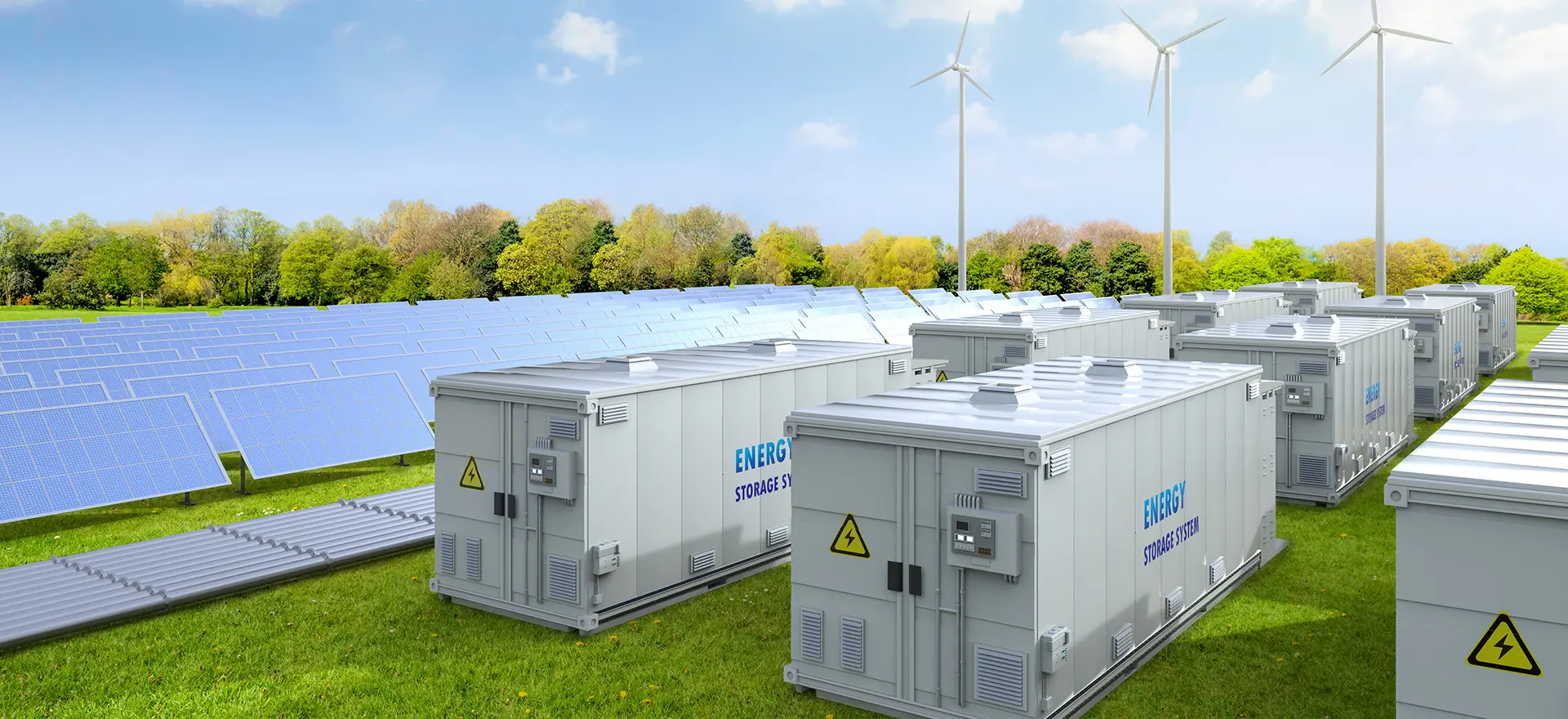
At present, onshore electricity generation developments in Scotland exceeding 50 MW – including onshore wind, solar, biomass, hydropower, pumped storage and Battery Energy Storage Systems (‘BESS’) – are determined by the Scottish Government’s Energy Consents Unit (‘ECU’) under the Electricity Act 1989, rather than by local planning authorities (‘LPAs’) under the Town and Country Planning (Scotland) Act 1997. However, this position may be subject to change, as the Scottish Government is currently consulting on proposals to increase the 50 MW threshold for onshore electricity generation developments.
For context it is worth noting that the 50 MW threshold for certain generating stations has been in place since the Electricity Act 1989 came into force. Renewable electricity generation has grown substantially in this time. In 2004, renewables generated 11.7% of the Scotland electricity, this has increased to 73% in 2024
[1]. The 50MW threshold has survived devolution, planning reform, and 30+ years of technological change without being reviewed. Today, onshore generating stations of over 50MW are relatively common, so the existing threshold can feel outdated. Increasing the thresholds could stop renewable energy developments being artificially ‘capped’ at 50MW to keep them within the Town and Country Planning (Scotland) Act 1997 consenting regime.
This blog will explore some of the potential benefits and drawbacks of increasing the 50 MW threshold and provide some potential alternatives to simply increasing the threshold as a marker of determining who is best placed to assess applications.
Consideration of the benefits and drawbacks
Let’s begin with the potential benefits of increasing the threshold.
Faster decision-making and reduced burden on Scottish Government
The Scottish Government via the ECU has committed to a target of determining most energy consent applications within 12 months if there is no public inquiry, or 24 months if there is an inquiry. However, the Scottish Government does not maintain or publish pre-calculated average timescales for determination of such applications. This limits the ability to directly compare performance against the Scottish Government’s stated targets, although previous analyses by
Brodies LLP and
RenewableUK has suggested that these timescales are not necessarily being met.
So, if more projects could be determined LPAs would this result in faster decision making? Local planning authorities in Scotland have a statutory determination period of four months for ‘major’ applications. The actual average decision time is often longer (approximately 10 months in 2024/25 for major electricity generation developments)
[2], however this is still an improvement on the timescales when compared with the ECU commitment to 12/24 months.
Greater local democratic control and increased budget for local authorities
Currently the LPA acts as a statutory consultee on applications being considered by the ECU, and our experience is that their response is critical to the determination of the application (not least because an objection from the planning authority currently automatically triggers a public inquiry
[3]). However, the local planning authority is ultimately not the decision-maker, which is made centrally on behalf of Scottish Government.
The LPA’s current role as a key statutory consultee to ECU considered applications is naturally resource intensive, they essentially assess each application as they would if they were determining it themselves. The local authority is only partially compensated on a voluntarily basis by the ECU for this (the Electricity Act 1989 allows for a voluntary financial contribution, equivalent to 50 % of the application fee paid). However, if the local planning authority was the decision-maker, they could retain the full fee directly allowing local authorities to better recover their costs and strengthen planning capacity locally.
Increasing the threshold would result in more developments being considered by LPAs. This could help address any perceptions that centralised decisions lead to local views not being fully considered. More localised decisions may also mean that development decisions more successfully reflect local context and any conditions imposed would similarly be attached in full knowledge of local circumstances.
However, we must not lose sight of the fact that new electricity generation projects are critically important to Scotland’s transition to net zero and greater control of our energy supply. These are matters of national importance and removal of centralised decision making could lead to inconsistent decisions across Scotland and impact on Scotland’s transition to clean energy.
Whilst there are potential benefits to increasing the threshold, consideration of the potential drawbacks of this approach are explored below.
Capacity and pressure on local authorities
There is the potential that increasing the threshold is simply shifting the burden from the ECU onto LPAs at a time when they are already stretched and struggling to deal with their planning application workload. That said the ECU consenting process as highlighted above already requires significant input from LPAs and shifting responsibility would be balanced against this.
Potential increased local opposition, legal risks and delays
Whilst decision-making by planning committees (where most schemes over 20MW would be heard) at the LPA level would empower local democracy, it could also increase the influence of local opposition, making some energy projects harder to approve. There is the potential that local issues may be weighed more strongly than meeting national climate targets, which can feel further removed from local communities. As local councillors are directly exposed to electoral pressure, objection campaigns can also gain more traction. The result could be that schemes are refused that might have otherwise been consented by the ECU, or that similar projects are approved in some local authorities but refused in others.
This doesn’t mean local delegation is wrong, but might require additional measures such as sufficient resourcing, further training for local councillors and planners where required, and perhaps a framework for decision making setting out clearly what are material considerations. Potentially a National Scheme of Delegation or a clearly set out referral process could be put in place to ensure a consistent approach across the country.
Without a National Scheme of Delegation or some other form of referral such as applications proposed for refusal over 50 MW trigger a national review, increased local opposition could result in more refusals at a local level. These refusals could result in more appeals being made, shifting the burden from the ECU to the Planning and Environmental Appeals Division (DPEA) and ultimately back to Scottish Government. Appeals are lengthy processes and, combined with the original application and determination timeframes, can present notable delays to any development that might ultimately be approved.
Alternative approaches?
The Scottish Government is consulting only on increasing the MW threshold however there are alternatives that could improve the consenting process. MWs measure electrical output, not planning impact and for this reason, we consider three key alternatives to MW thresholds alone being the factor that determines where consent decisions should be made.
Removing BESS as a generating station
The Scottish Chief Planner's letter dated August 2020 confirmed that BESS schemes should be treated as ‘electricity generating stations’ in terms of Scottish legislation. This is even though, strictly speaking, they do not generate electricity, and instead store and releases power already generated elsewhere. Wales, in 2025, took a similar stance by including BESS within the national level consenting. We have another
blog that looks at this matter in Wales specifically. This position is in contrast with England where BESS developments were removed from the requirement to obtain a Development Consent Order (‘DCO’) as Nationally Significant Infrastructure Projects (‘NSIPs’) in December 2020, regardless of their MW capacity.
Statistics provided by the Scottish Government as part of their consultation show that of the renewable electricity generation projects being considered by the ECU in Q2 of 2025 more than a third were BESS projects (45) and more than a half were for wind (74). By removing some, if not all BESS projects from the energy consent process, this would allow the ECU to consider proposals where the impacts are more likely to be considerable (such as large wind farms), rather than BESS proposals where the impacts are typically more localised.
Technology-specific threshold
Whilst there is simplicity in having one MW threshold for all generating stations, this approach may no longer be suitable for current renewable energy projects. Not only has England removed the threshold for BESS entirely in terms of NSIPs, but they have also increased the threshold for solar to 100 MW. This approach reflects the nuances of different types of renewable energy developments and their impacts.
The existing system treats MWs as having equivalence across all types of development. However, two projects with the same MW output could have radically different impacts, particularly in the case of wind farms where height will drive impact far more than the MWs produced. As technology advances greater MWs will for some technologies be achievable on smaller footprints. These matters should all be a consideration.
Considering wider factors
Introducing additional metrics that would trigger an energy consent application could assist in tackling the varying impacts of different types of renewable energy applications. Perhaps it is time to consider the size of the site rather than the capacity of the development in MWs when setting thresholds. Furthermore, MW limits are quite often dictated by grid connections, not the ability of a site to generate.
Set out below is an illustration of how wider factors could be considered in determining thresholds and who determines what applications – ECU or LPA. Of course, there are other potential approaches to allowing a wider number of factors to be considered when determining the route to consent.
In this illustration, where a proposal meets all three criteria in the ‘Local Authority’ column of the table below it would be considered under the terms of the Town and Country Planning Act by the LPA. Where a proposal meets the capacity criteria and either the site size or height criteria (or both) under ‘Energy Consent Unit’ column, it would be considered under the Electricity Act by the ECU.
| |
Local Authority |
Energy Consent Unit |
| Capacity |
<150 MW |
>150 MW |
| Site Size |
< [to be defined] ha |
>[to be defined] ha |
| Height |
< [to be defined] m |
>[to be defined] m |
Conclusions
A 50 MW onshore wind farm was once considered large, and the existing legislation is focused around a very different time in terms of renewable energy technology. Today, a range of renewable projects of up 150 MW are commonplace. As technology improves, projects will be able to increase in MW output without significant changes in their physical or environmental impacts. The existing thresholds increasingly capture projects that might now be considered as routine infrastructure rather than being truly nationally significant.
Using just MW capacity alone to determine the route to consent or otherwise brings with it the potential to limit the efficient use of land in that it potentially places a restriction on efficiency of technology and innovation. Technology is evolving and currently consented BESS and Solar projects in particular could increase their MW output from the same footprint in the future, but this is restricted by MW thresholds.
As we have set out, there are alternatives to just increasing the MW capacity thresholds which is worth further exploration. If the legislative and consenting system is to be fully modernised and made fit for purpose thresholds and additional trigger tests should be considered for different development types driven by their likely local/national impact not by MW output alone.
Responses to the consultation are due by 27 March 2026. If you’re interested in making representations to the Scottish Government and would like to discuss this further, please do get in touch with Lichfields.
[3] A 2024 consultation by the Department for Energy Security & Net Zero included proposals to remove this trigger, and the ability for the Scottish Government to make this change was brought forward through the Planning and Infrastructure Act 2025.