Last year, on average, one pub closed every day
[1]. This year, the Times
[2] has suggested up to 3 licensed premises could be closing per day, with the UK hospitality market in severe crisis, driven by soaring energy costs, high wage inflation, and reduced consumer spending with thousands of venues at risk and operators citing mounting unsustainable debt. Behind this headline figure lies a deeper structural shift, with changing consumer habits
[3], rising operating costs
[4] and growing viability pressures
[5] reshaping the pub market.
However, while much of the debate focuses on taxation, business rates and energy costs, planning policy also plays a significant, and sometimes overlooked, role. As the market evolves, a question emerges of whether planning policy remains wholly aligned with today’s shifting trends and economic reality, or whether policy is operating on assumptions that no longer hold true?
This blog considers the national picture before focusing on London’s policy framework and reflecting on how policy can both protect those most valued pubs and enable adaptation in a changing market.
The National Picture
During 2024 and 2025, hundreds of pubs were demolished or converted to alternative uses, contributing to almost 2,000 net losses over the past five years
[6]. While closures are not a new phenomenon, the pace and persistence of decline reflect deeper structural challenges rather than a temporary market correction.
Operators are contending with a convergence of cost pressures which are significantly affecting viability. Sharp uplifts in rateable values have pushed up business rates, while rises in the National Living Wage have added to staffing costs in an often labour‑intensive and competitive sector. At the same time, energy prices and supply chain costs remain elevated, and alcohol duty increases continue to erode margins
[7]. These pressures coincide with reduced consumer spending, as households absorb higher mortgage repayments and rental costs, limiting the frequency and scale of expenditure alongside structural and generational shifts in drinking and greater interest in health and fitness.
Although recent government announcements on business rate relief
[8] may provide some short-term support, they do little to alter the structural economics facing many operators. In certain locations, particularly high-value urban areas, the residual land value of alternative uses can significantly exceed the use value of a pub, intensifying pressure for redevelopment. As this viability gap widens, the role of planning policy becomes more pronounced: should it act as a firm brake on change, or adapt to ensure that protection is both proportionate and sustainable?
London: A Changing Market
This tension is particularly pronounced in London.
Historically, London’s pub culture has been closely linked to office-based working patterns and a strong after-work social scene. However, hybrid working has reduced weekday footfall
[9], while broader cultural shifts, including reduced alcohol consumption among younger demographics
[10], are reshaping demand.
In areas where multiple pubs once thrived on consistent weekday trade, operators now compete for a smaller and more volatile customer base. The result is increased fragility, particularly for pubs without a distinctive offer, strong heritage identity or clear community function.
The London Plan: Protection as the Default
Against this backdrop, the London Plan adopts a strongly protective stance. This stance is often mirrored elsewhere as the default for pub protection.
The London Plan Policy HC7, Protecting Public Houses, requires boroughs to protect pubs where they have heritage, cultural, economic or social value.
“A In Development Plan Documents, town centre strategies, and planning decisions, boroughs should:
1) protect public houses where they have a heritage, economic, social or cultural value to local communities, or where they contribute to wider policy objectives for town centres, night-time economy areas, Cultural Quarters and Creative Enterprise Zones
2) support proposals for new public houses where they would stimulate town centres, Cultural Quarters, the night-time economy and mixed-use development, taking into account potential negative impacts.
B Applications that propose the loss of public houses with heritage, cultural, economic or social value should be refused unless there is authoritative marketing evidence that demonstrates that there is no realistic prospect of the building being used as a pub in the foreseeable future.
C Development proposals for redevelopment of associated accommodation, facilities or development within the curtilage of the public house that would compromise the operation or viability of the public house use should be resisted.”
The intention is clear and widely supported; pubs can act as important community anchors, contribute to the night-time economy and often hold heritage value. However, in practice, the breadth of the policy and notably its application presents challenges.
The criteria (heritage, cultural, economic or social value) are wide-ranging and often difficult to disapply. It can be argued that almost all pubs contribute in some way socially or economically. This, in combination with often some local objection (we all have our favourite pub!) means protection is often the default position irrespective of viability context or market change. The placing of pubs within a ‘sui generis’ class means it can often be difficult to convert, even to other town centre / hospitality uses.
This creates a key question particularly for the emerging London Plan, but also for other Plans: should all pubs be protected equally, or should policy distinguish more clearly between those of strategic or exceptional value to preserve the best, but not to protect the all?
A blanket approach risks dispersing investment thinly across struggling assets, rather than focusing protection where it delivers the greatest public benefit.
A Practical Example: Reconfiguration Over Retention
Recent experience demonstrates that a more nuanced approach can be possible and can add to vitality and viability in town centres.
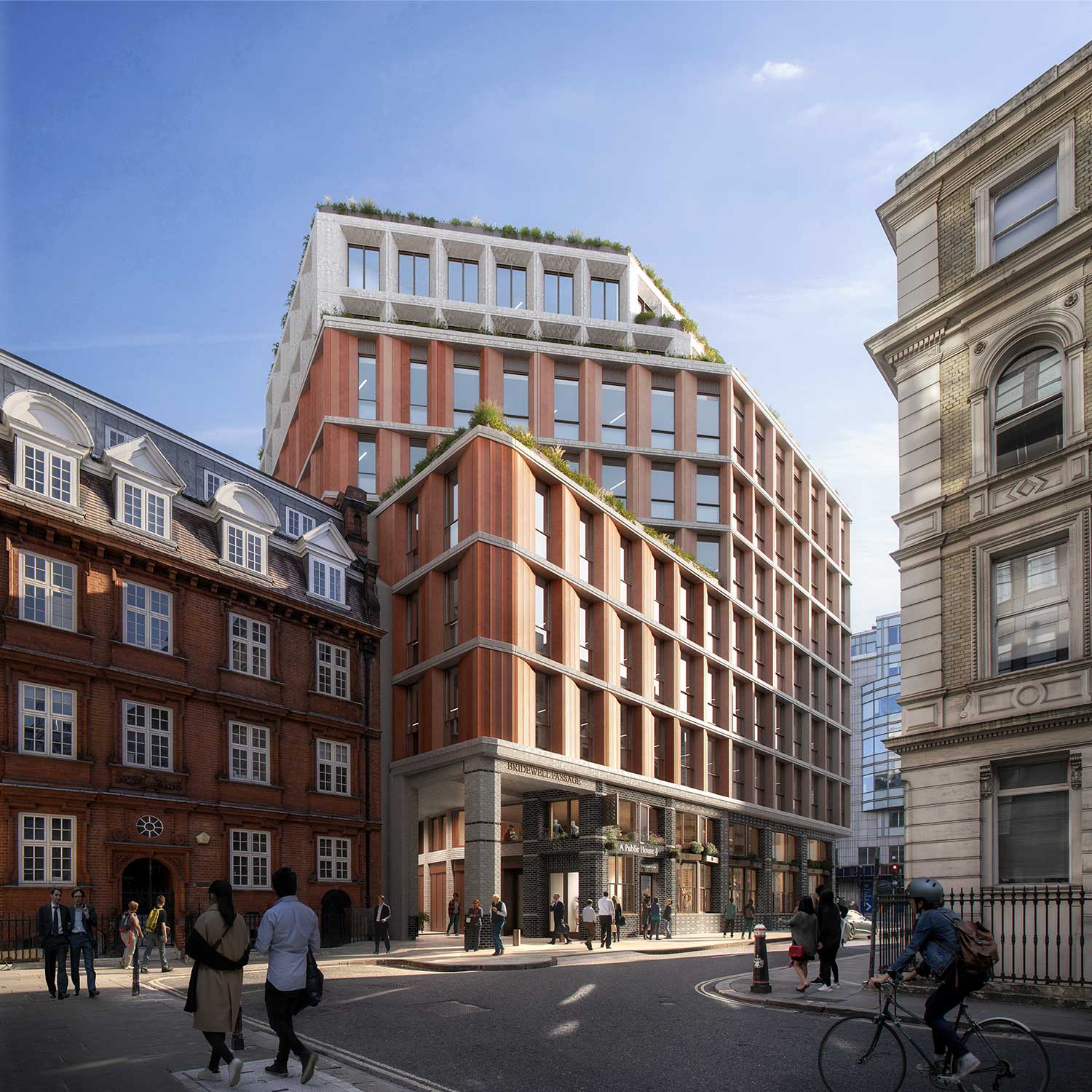
Lichfields supported an application at 10 New Bridge Street in the City of London, involving the reconfiguration of an existing public house. The proposals included a reduction in overall pub floorspace, with the removal of upper floor areas that functioned largely as circulation and ancillary space.
While this technically conflicted with Policy HC7 due to the net loss of pub floorspace, the scheme materially improved the quality and functionality of the retained space. The reconfigured layout delivered a more efficient, commercially viable and operationally coherent ‘pub’ offer, but with significantly enhanced food capability, transforming an almost exclusively wet trade to an all-day coffee / food hub based destination.
This was not without objection, but at the decision making stage, the City of London recognised that the proposals enhanced the long-term sustainability of the use, and provided a destination which would enhance place and provide a destination, despite the numerical reduction in floorspace.
The case illustrates an important principle, whereby viability and functional optimisation can, in some circumstances, better secure a future than rigid adherence to quantitative floorspace retention.
Image credit: PixelFlakes
Towards a More Targeted Policy Framework
With the next London Plan expected to be adopted in 2027
[11], there could be opportunity to refine the policy approach.
This is not an argument against pub protection. Rather, it is a case for more targeted and evidence-based evaluation that reflects the structural shifts affecting the sector and which seeks to preserve the best. A more nuanced framework could distinguish more clearly between pubs of exceptional heritage, architectural or community significance and those whose contribution, while valued, is less strategically critical. In doing so, policy could prioritise safeguarding assets that genuinely function as heritage examples, community and cultural anchors or key components of the night-time economy.
Importantly, policy could also provide more explicit support for evolution, flexibility and reconfiguration proposals that often help safeguard operational sustainability. As demonstrated in practice, retaining nominal floorspace does not necessarily secure a pub’s future if the space is inefficient or poorly configured. Allowing flexibility where proposals demonstrably improve functionality, quality and long-term resilience could better align policy objectives with commercial reality.
Finally, there may be merit in acknowledging hybrid or complementary models that maintain a pub presence while diversifying income streams. In a sector increasingly characterised by adaptation, whether through food-led offers, workspace integration or mixed-use redevelopment, policy that enables carefully managed evolution may ultimately deliver stronger and more durable outcomes than rigid preservation. Ultimately this could be through reform of Permitted Development or, more widely, through the Use Classes Order.
Such refinements would not dilute protection; rather, they would ensure that it is applied where it delivers the greatest public benefit.
Looking Ahead
Pubs remain an important component of our social and economic fabric. However, the market in which they operate has changed over the past decade, with a ‘perfect storm’ of economic challenges and social and structural changes.
As planning policy evolves, there is a need to balance protection with pragmatism. Ensuring long-term resilience may, in some cases, require adaptation rather than strict preservation.
For applicants, operators and decision-makers alike, the key challenge will be navigating this tension, demonstrating when protection remains justified, and when carefully considered change better secures sustainable outcomes.
Footnotes
[1] https://www.theguardian.com/business/2025/dec/31/one-pub-a-day-closed-permanently-in-england-and-wales-in-2025
[2] The Times 27 April 2026
[3] https://www.cbre.co.uk/insights/articles/how-are-uk-pubs-adapting-to-modern-drinking-trends
[7] Since Duty Reform in 2023, the Duty on Wine has increased by up to 49% and beer and spirits up to 18%