The Government’s commitment to reach net-zero greenhouse gas emissions by 2050 has become a defining objective across the built environment sector since it was enshrined in legislation in 2019 under the Climate Change Act 2008 (2050 Target Amendment) Order 2019. Net-zero is achieved where total greenhouse gas emissions are balanced by emissions removed from the atmosphere. Within this context, planning and decarbonisation are intrinsically linked; the planning system provides a mechanism to enable upgrades to existing estates, whilst also securing net-zero and low emission new development.
In the UK, and linked to the Climate Change Act, the NHS is working towards becoming the world’s first net-zero health service (for emissions it directly controls) by 2040. This target requires a substantial reduction in energy-related emissions across the NHS estate, reflecting the NHS’ position as one of the UK’s largest public landowners and largest single public energy user. These objectives apply equally to capital investment in existing estates and to the construction of new healthcare facilities.
Retrofitting the NHS estate
With energy use in existing buildings representing one of the most significant contributors to NHS emissions, and heating remaining one of the largest sources of emissions across the NHS estate
, decarbonisation is both an environmental imperative and an opportunity to enhance the long-term resilience and efficiency of healthcare infrastructure. The Health and Care Act 2022 requires all NHS Trusts and Integrated Care Boards to implement approved ‘Green Plans’ to set out how each Trust will reduce emissions and mitigate the impacts of climate change across their estate and operations.
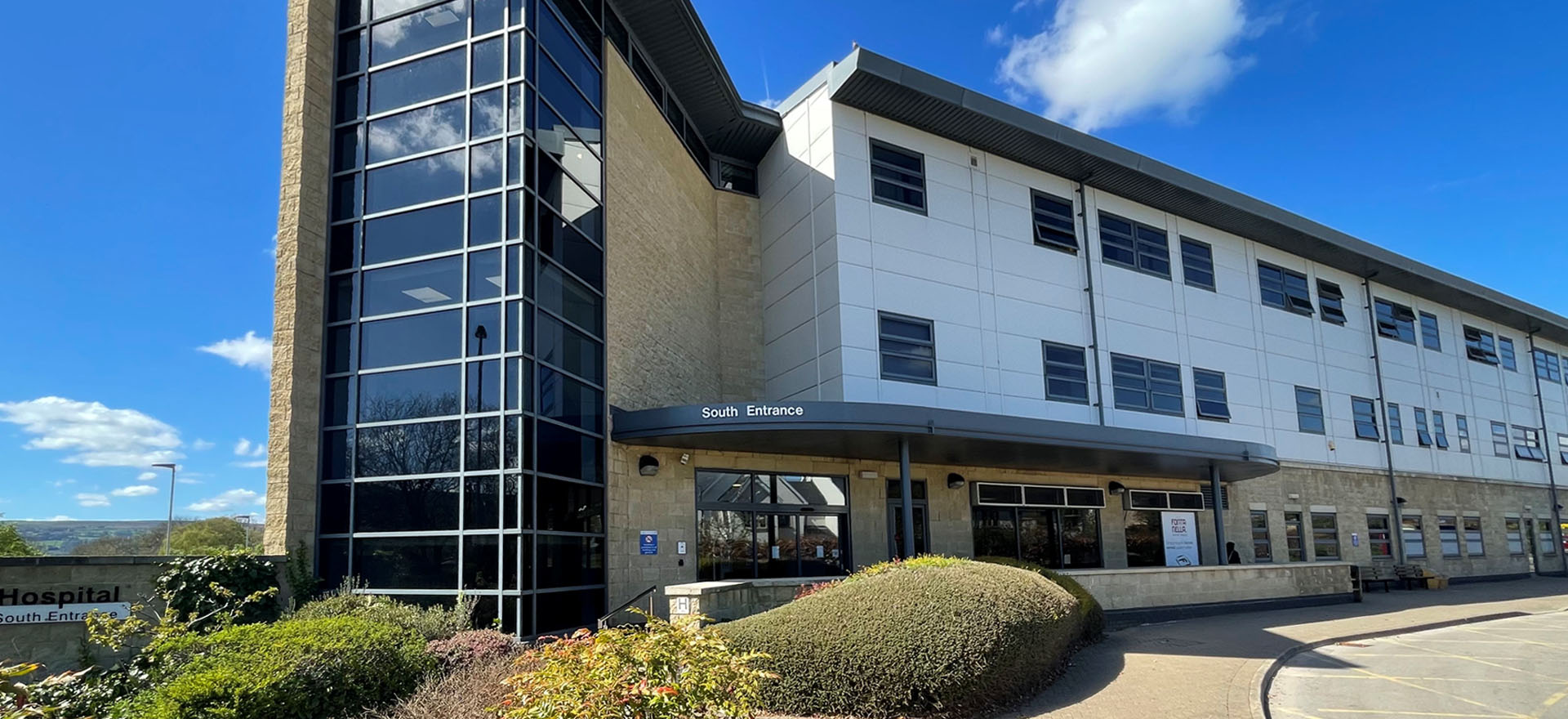
Lichfields Image: Wharfedale Hospital, Otley, Leeds Teaching Hospitals NHS Trust
As set out in previous Lichfields blogs
, this often involves transitioning away from fossil-fuel heating systems through interventions such as air-source and ground-source heat pumps, alongside on (or near) site solar generation. For major refurbishment projects and new development, the approach to net-zero approach is guided by the NHS Net Zero Building Standard, which seeks to ensure consistency in the delivery of low-carbon healthcare environments while allowing flexibility to respond to site-specific constraints. This should be a consideration from project inception and can be achieved through:
-
Increasing on site renewable generation;
-
Phasing direct fossil fuel usage out of all primary heating and cooling systems;
-
Optimising self-supply from renewables with energy storage and demand response technologies;
-
Installing EV charging points;
-
Considering embodied and whole life carbon.
Early consideration of these measures is critical to successful project delivery.
The role of planning in decarbonisation
Engagement with the planning system is essential to decarbonising the sector and it is a key stage of ensuring the NHS’ and health care providers ambitious net zero targets are met. Planning permission is often required for the installation of heat pumps and solar panels across existing estates making proactive engagement with Local Planning Authorities (LPAs) a fundamental component of sustainable retrofit programmes.
Funding constraints remain a significant challenge in relation to retrofitting. The NHS maintenance backlog is estimated at c. £14 billion, with capital budgets frequently absorbed by urgent maintenance rather than longer-term sustainable upgrades. This restricts the financial flexibility available to invest in deep retrofit measures necessary to meet net-zero targets. Against this backdrop, the Government’s Public Sector Decarbonisation Scheme (PSDS), introduced in September 2022, has become a key funding mechanism supporting emissions reduction across public sector buildings, including the NHS estate.
Public Sector Decarbonisation Scheme – national funding patters
Phase 4 of the PSDS is currently in operation, supporting projects across the 2025/26 and 2027/28 financial years. A total of £816,619,753 has been allocated across the country, with around half of this funding awarded to NHS bodies.
As illustrated in the infographic below, funding distribution varies across regions. London received the largest allocation at approximately £167 million, followed by the North West at £132 million. Yorkshire and the Humber (£112 million) and the East Midlands (£81 million) also secured substantial investment. Importantly, smaller regions such as the North East received awards in the order of £79 million, demonstrating that significant funding opportunities have been available beyond the largest metropolitan areas.
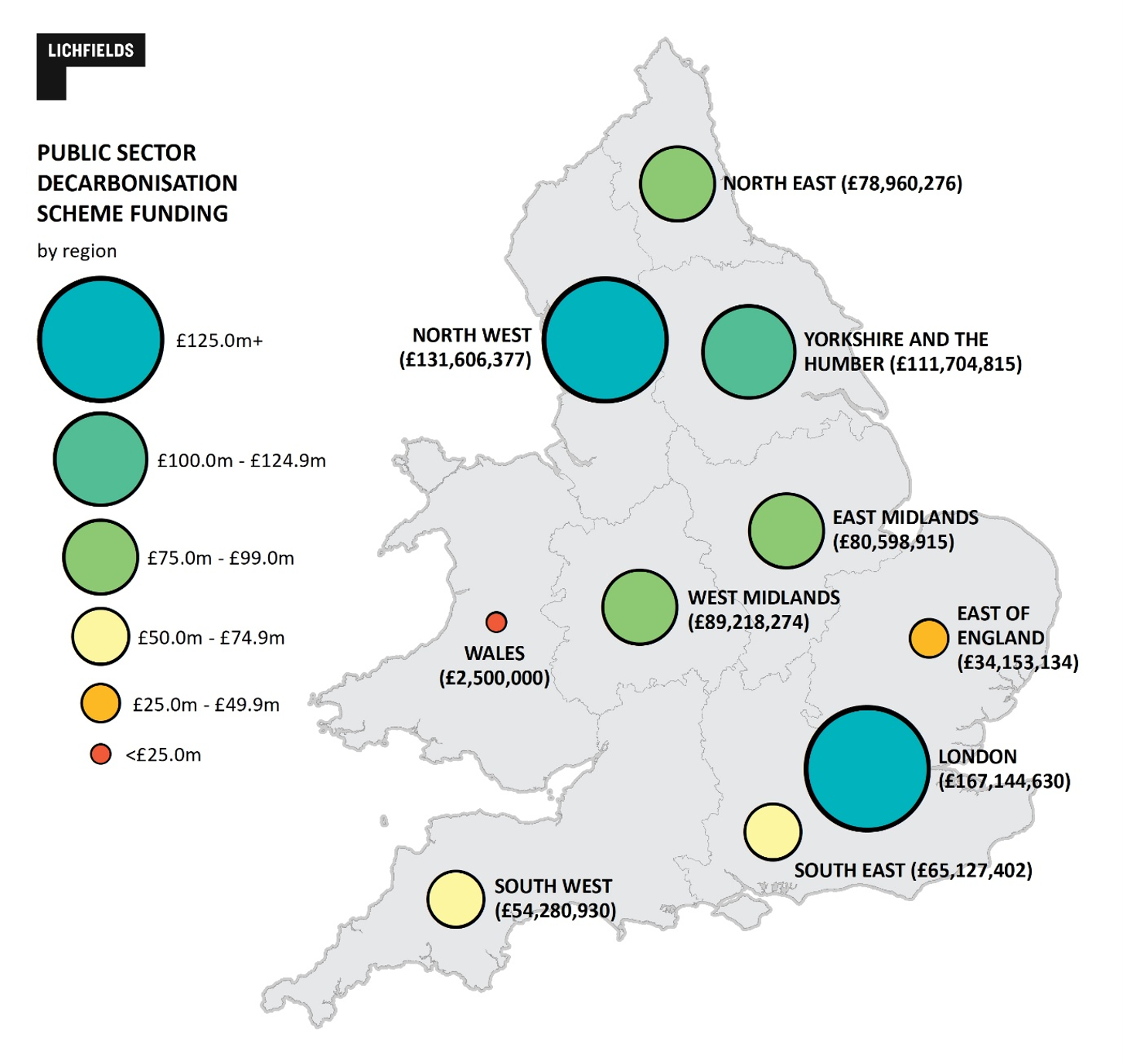 |
The regional distribution of PSDS funding reveals clear variation in both scale and uptake. While London and the North West secured the largest allocations - likely reflecting the size and density of their public sector estates - smaller regions have also attracted funding at levels capable of delivering transformative outcomes. For example, the North East, with the smallest population of the regions referenced (2.65 million according to ONS mid‑2024 estimates, published July–November 2025), nonetheless received a substantial share of funding. This equates to £29.80 per person and 9.7% of the total funding awarded.
This relatively high level of funding may indicate that certain Trusts possess stronger awareness of available funding streams, greater expertise in navigating application processes, or a more established commitment to delivering net-zero ambitions across their estates.
Within the North East, approximately £20 million was awarded to Northumbria Healthcare NHS Foundation Trust. The Trust has a strong track record in delivering net-zero initiatives, having previously secured £22 million in Phase 1 of the PSDS. This earlier funding supported a major carbon reduction scheme at North Tyneside Hospital, delivered in collaboration with Lichfields (see case study below). The Trust’s approach is guided by its Green Plan Strategy and supported by a dedicated team of sustainability officers focused on reducing emissions and identifying cost-effective energy solutions.
By developing established partnerships with key stakeholders such as Lichfields, the Trust has been able to streamline project delivery and position itself effectively to secure subsequent funding. This highlights the critical role of cross-disciplinary collaboration - including planning - in successfully accessing and implementing decarbonisation funding. We discuss this further below.
Delivering decarbonisation in practice: Northumbria Healthcare NHS Foundation Trust
Funding through Phase 4 of the PSDS is supporting a wide range of technologies, including air‑source heat pumps at 135 sites and solar PV installations at 38 sites nationally. Within the North East, a significant beneficiary of funding through the latest award, over £20 million – around 25% of the region’s allocation – was awarded to Northumbria Healthcare NHS Foundation Trust to support the decarbonisation of three hospital sites at Wansbeck, Cramlington and Hexham.
Across all three sites, existing heating systems are being replaced with a combination of ground‑source, air‑source and water‑source heat pumps. Lichfields is advising the appointed contractor, Dalkia, on the planning implications of these upgrades, drawing on a detailed understanding of each site’s planning history and local context. Notably, Lichfields previously secured planning permission for the Northumbria Specialist Emergency Care Hospital at Cramlington itself in 2013.
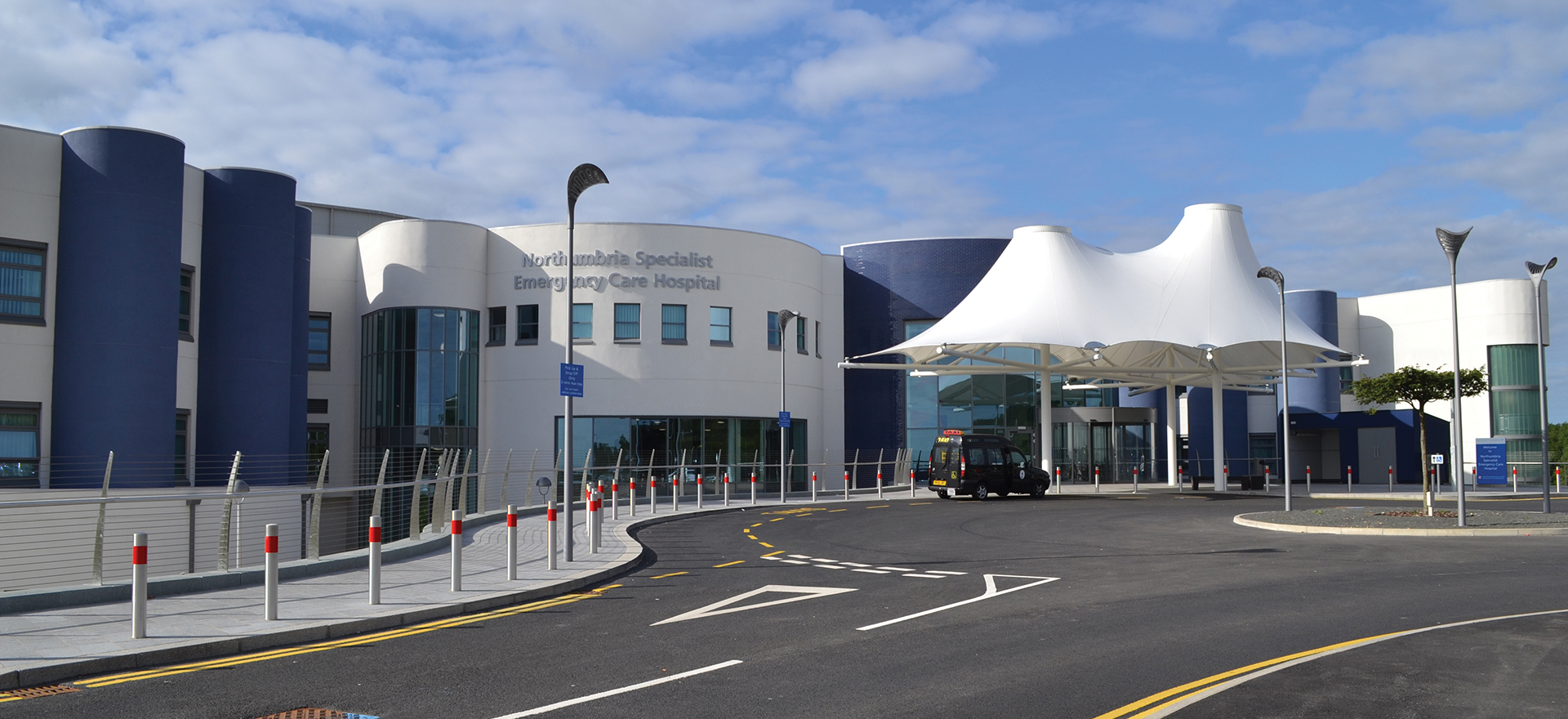
Lichfields Image: Northumbria Specialist Emergency Care Hospital
The project demonstrates how a combination of planning tools can be used to streamline delivery, including minor applications, prior approvals, permitted development rights and lawful development certificates. This approach enables timely implementation while ensuring that potential amenity impacts, such as noise or visual effects associated with new technologies, are appropriately assessed and mitigated. Critical to its success is early and proactive engagement with local planning authorities, in order to provide meaningful information regarding the detail and nature of the proposals at pre-application stage and agree the scope and type of application required. Amid the current pressure upon local government resource, it is fair to say that both local planning authorities and health trusts can unlock efficiencies through pursuing any more streamlined planning process is available, such as prior approvals or lawful development certificates.
This experience builds on Lichfields’ earlier work at North Tyneside Hospital, where a £22 million carbon reduction scheme was delivered in 2021. Working alongside Breathe Energy Ltd, Lichfields supported the introduction of large‑scale heat pumps, boiler upgrades and a solar PV installation with an output of approximately 975 kW. The project is estimated to deliver a 75% reduction in CO₂ emissions, saving around 3,470 tonnes of CO₂ per year and approximately £500,000 annually in energy costs, demonstrating the tangible benefits of well‑planned decarbonisation projects.
At Wansbeck General Hospital, Ashington, Lichfields are currently seeking consent for an innovative decarbonisation scheme utilising ground source heat pumps to tap into warm water from historic coal workings under the Hospital, associated with the nearby former Woodhorn Colliery. Capitalising on resources left over from Northumberland’s coal-based energy past, there is a neat symmetry and inherent sustainability in using the same infrastructure to heat and power a modern healthcare facility. With planning policy at national and local levels fundamentally supportive of both improved healthcare infrastructure, and decarbonisation, we continue to lead local community engagement and work closely with Northumberland County Council as the local planning authority in order to provide comfort that all other technical considerations arising from the scheme, for example in relation to noise, have been robustly addressed through the planning process.
Looking ahead
Alongside the Public Sector Decarbonisation Scheme PSDS, the Low Carbon Skills Fund previously played an important role in supporting feasibility studies and heat carbonisation plans, although it was not renewed for 2025-2026. The absence of this preparatory funding further reinforces the need to embed decarbonisation considerations at project inception and to take a strategic, plan‑led approach.
Decarbonising the NHS estate is a complex but essential task, requiring alignment between national policy, funding mechanisms, technical solutions and the planning system. While the PSDS has provided a critical funding catalyst, successful delivery increasingly depends on early planning engagement, a clear understanding of consent pathways and the ability to integrate low‑carbon technologies into operational healthcare environments.
Lichfields has extensive experience supporting NHS Trusts and their delivery partners to navigate these challenges, combining technical planning expertise with a deep understanding of healthcare estates. As public sector decarbonisation continues to evolve, proactive planning will remain central to turning ambition into deliverable, low‑carbon outcomes.