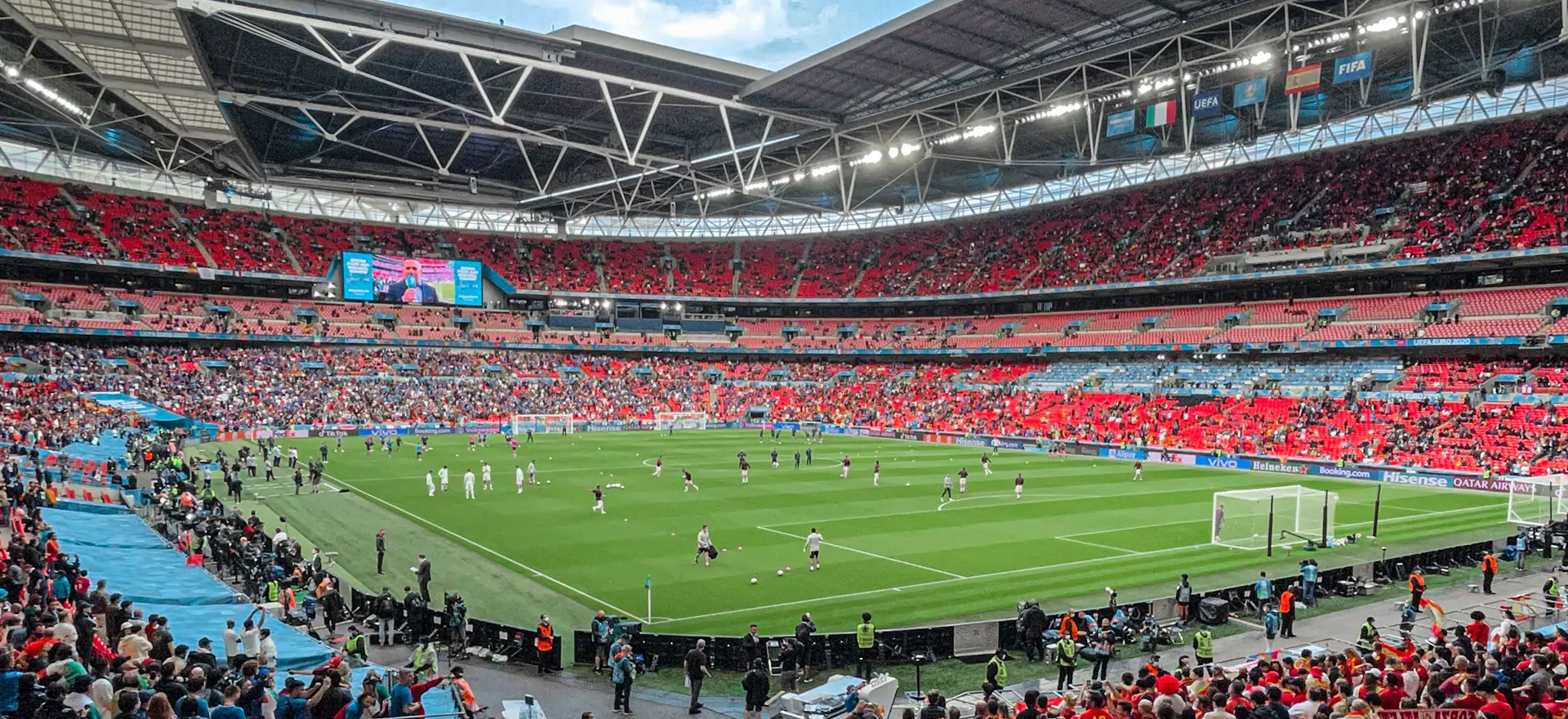
With the 2026 FIFA World Cup now underway across Canada, Mexico and the United States, the economic power of sport is again on global display. The tournament is the largest FIFA World Cup to date, with 48 teams and 104 matches. FIFA and the World Trade Organisation have estimated that the tournament could help drive up to $40.9bn in global GDP, deliver $8.28bn in social benefits and support nearly 824,000 full-time equivalent jobs globally.
[1] [2]For clubs, investors, developers and operators, the wider message is clear: sporting and entertainment assets have the potential to generate huge value across places, supply chains and local economies.
In the UK, that local economic effect is increasingly visible. Barclays’ analysis of the 2024/25 Premier League and Barclays Women’s Super League seasons estimated that top-flight football matchdays generated £2.3bn of consumer spending in local economies. Spending within 1km of stadiums rose by an average of 4.1% on matchdays compared with non-matchdays, with fans turning fixtures into fuller days out across travel, food and drink, entertainment, shopping and post-match activity.
[3]That is the core logic behind the rise of the sports and entertainment district. The venue creates footfall and identity. The surrounding district captures value. The two are designed to reinforce each other.
Across the UK, major venue projects are increasingly being conceived as anchors for wider mixed-use districts. Sport, live entertainment, food and beverage, hospitality, hotels, workspace, public realm and community uses are being combined into all-day, every-day, year-round destinations. For clubs, investors, developers and operators, this creates a significant opportunity. It rewards projects where the venue strategy, real estate proposition, economic benefits case and planning approach are integrated from the outset.
The scale of the opportunity is significant. DCMS estimates that in 2024 the sport sector contributed around £20.6bn in GVA to the UK economy, with the cultural sector contributing around £40.3bn and tourism directly contributing around £64.3bn. UK Music’s latest This Is Music report records that the UK music industry contributed £8bn in GVA in 2024 and supported 220,000 full-time equivalent jobs.
[4] [5]Sports and entertainment districts sit at the intersection of these sectors. At their best, they can create new revenue streams, attract private investment, support local jobs, generate visitor spending, strengthen supply chains, create community value and support places that work throughout the week and across the year.
From venue to destination
The traditional stadium model was heavily event-led, with revenue concentrated around matchdays or a limited calendar of major events. The newer model is more diverse. It asks a different question: how can the asset work every day, not just when the turnstiles are open?
Tottenham Hotspur Stadium is one of the clearest UK examples. The club’s socio-economic impact study reported that Tottenham Hotspur’s activity generated £344m in GVA and supported more than 3,700 jobs across Haringey, Enfield and Waltham Forest in 2021/22. Across Greater London, the reported impact was £478m in GVA and 5,100 jobs.
[6]The Tottenham example matters because the venue was designed to support a wider events strategy, including NFL, concerts, rugby, boxing and other major events. That creates a different operating proposition from a football only stadium. A broader events calendar supports more regular footfall, a wider visitor economy impact and a stronger basis for surrounding leisure, food and beverage, hospitality and commercial uses.
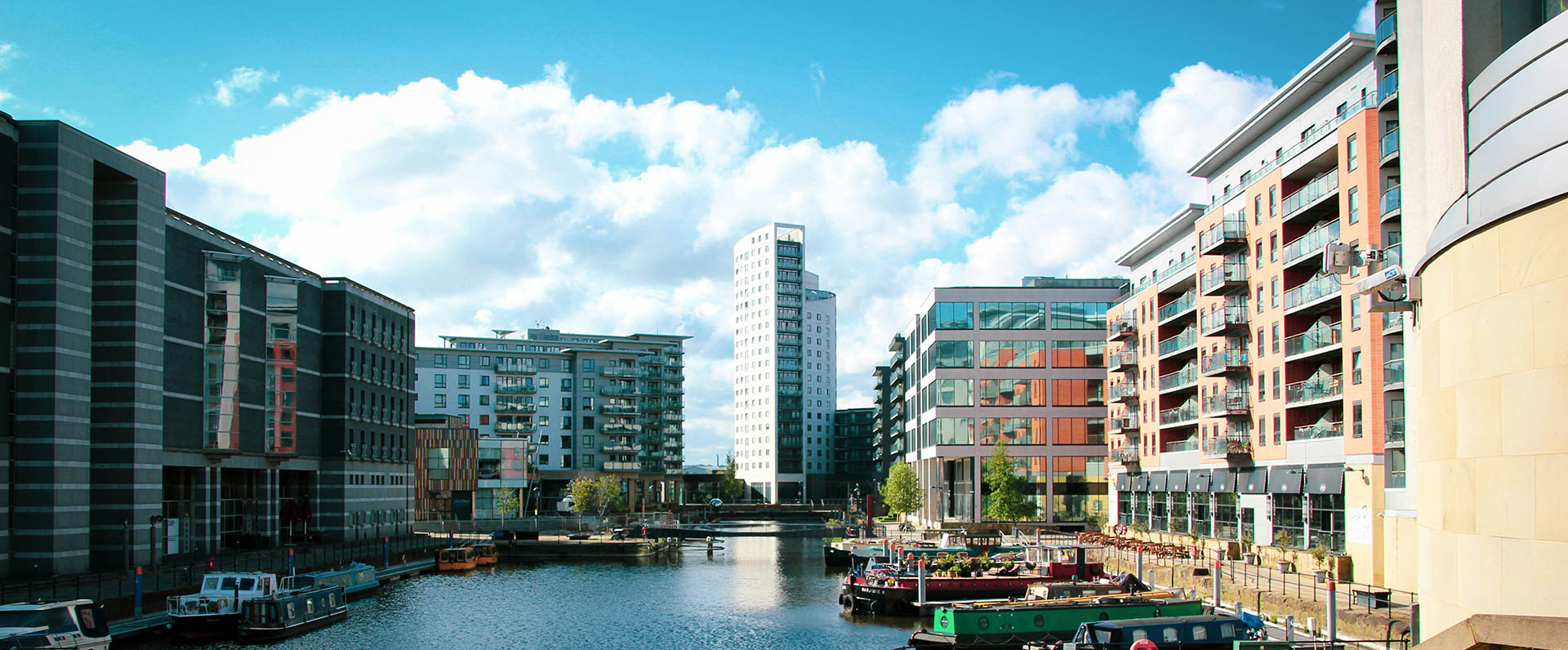
Wembley Park shows the same principle at a larger urban scale. Quintain’s case study material records around 500,000 sq. ft of retail and leisure and around 10,000 residents at Wembley Park, with the area now operating as a long-term, mixed-use neighbourhood around the stadium and arena.
[7]This shows that a major venue can become the anchor for a broader place strategy where event day activity, everyday uses, public realm and local connectivity reinforce one another.
At
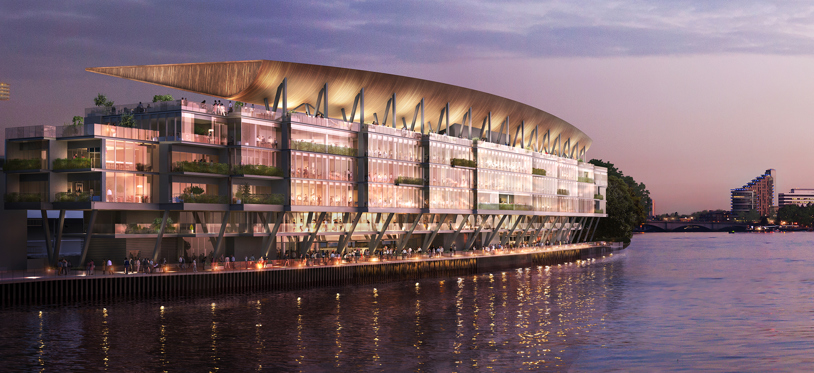
Craven Cottage, Fulham Pier - a project Lichfields has advised Fulham FC on for many years - provides a more compact but highly relevant example. On matchdays it is a football stand with extensive fan and hospitality facilities; on non-matchdays it is a riverside destination, with food and beverage, events, hospitality and use of the public realm designed to broaden the role of the stadium beyond matchday.
Image credit: Populous
The direction of travel is clear: stadium-led place creation is becoming an increasingly important part of the UK venue market.
Arenas are part of the same story
Arenas are increasingly central to the same discussion about entertainment-led investment, visitor economy growth and city competitiveness. Utilising the same infrastructure, stadia and arenas are obvious bedfellows.
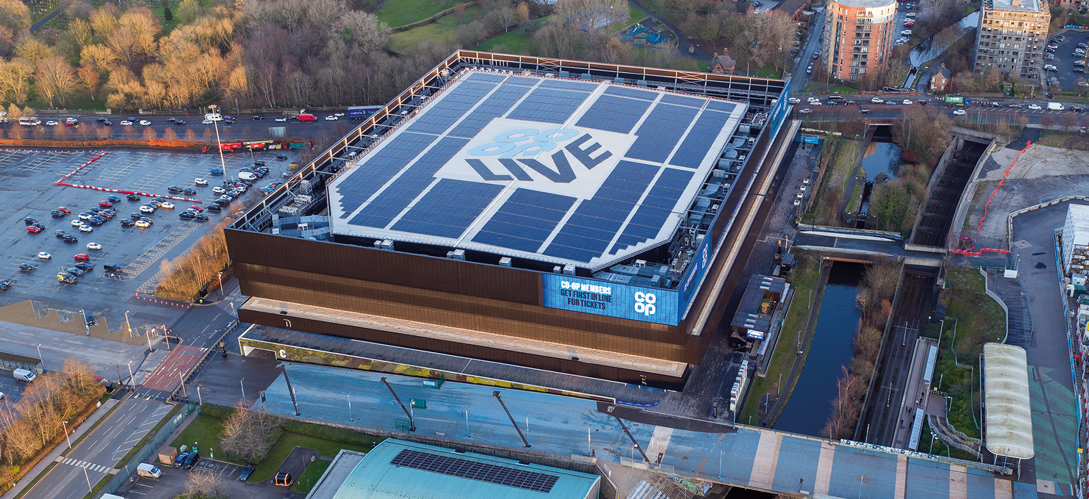
Co-op Live in Manchester is the most topical example, situated next to the Etihad Stadium. An economic impact report prepared by Lichfields, covering the period from construction through to the arena’s first year of operation in May 2025, reported more than £1.3bn in total turnover and around £785m in GVA to the UK economy. In its first year of operation, Co-op Live reported around £852m in turnover, £455m in GVA, 105 events and 1.5m fans.
[8]The Manchester impact extends beyond the arena itself. Co-op Live reports that £313.4m of the total GVA generated since building began was contributed to the Manchester economy, including visitor spending across hotels, restaurants, pubs and bars. The venue also demonstrates how major entertainment infrastructure can act as an economic and civic anchor, supporting jobs, visitor activity and wider engagement with the city.
[8]For operators and investors, this matters because the most compelling projects are increasingly judged on how well the venue supports a broader destination, how it extends dwell time, how it diversifies revenue and how it contributes to the surrounding economy.
The US influence – adapting the model for the UK
The 2026 World Cup also provides a natural moment to look at the North American market. Many of the tournament’s matches are being staged in a region where the sports and entertainment district has matured into a distinct real estate and operating proposition.
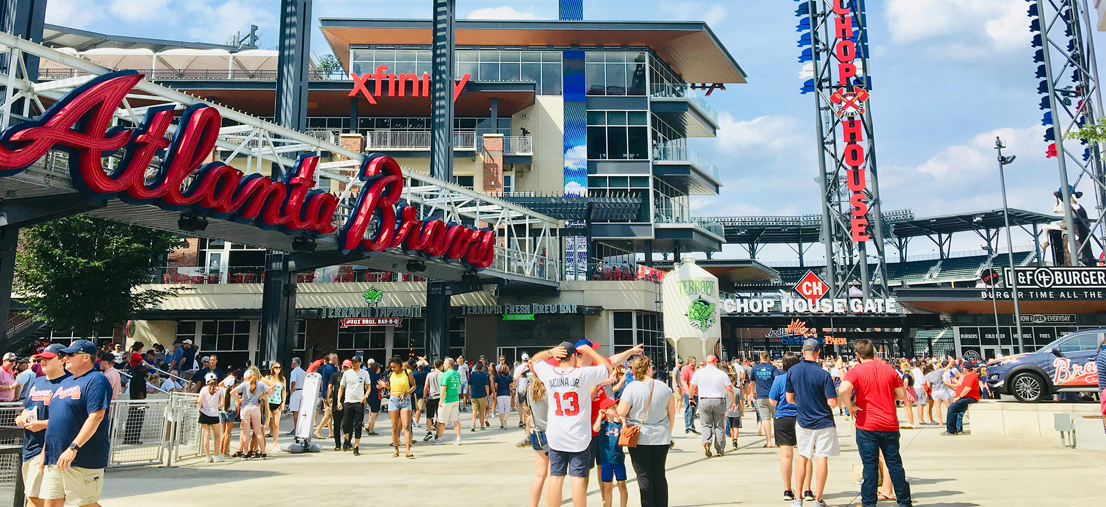
The Battery Atlanta has become one of the most closely watched examples. Located next to Truist Park, home of Major League Baseball’s Atlanta Braves, it demonstrates how a major sports venue can be paired with a wider mix of commercial, leisure, hospitality and residential uses. Atlanta Braves Holdings reported that, in 2025, its mixed-use development revenue grew by 45% to $97m, alongside baseball revenue of $635m.
[9]More broadly, a 2025 Klutch Sports study for Royal Bank of Canada, focused on the North American market, estimated that sports-anchored, mixed-use districts could attract more than $100bn of investment over the next 15 years, underlining the scale of investor interest in the model.
[10]That influence is now visible in the UK market. Co-op Live was developed by Oak View Group in partnership with City Football Group and Harry Styles, bringing a major US-based venue developer and operator into one of the UK’s leading music and entertainment cities.
In Birmingham, the proposed Sports Quarter represents a more direct example of US-backed sports-led regeneration, with proposals including a 62,000-capacity new stadium, sports campus, training facilities, academy, community pitches, and leisure, commercial and residential development.
[11]The UK is adapting the strategic logic of sports and entertainment districts to its own delivery environment. Land ownership, planning policy, community expectations, local government finance and public transport provision all shape how these projects come forward in the UK. The opportunity is to adapt the commercial logic of the venue-anchored district to those conditions, creating projects that are investable, deliverable, rooted in their local context and planned as integrated place propositions from the outset.
What this means for UK delivery
Venues need to work harder across the week and across the year. Food and beverage, hospitality, conferences, hotels, fan experiences, leisure uses, membership products and cultural programming can extend activity beyond core event days and create more resilient income streams.
The UK delivery environment makes the integration of planning, economics and operations particularly important.
First, the project needs a credible year-round operating model. The strongest cases explain how the venue and surrounding uses will operate in ordinary weeks, shoulder periods and non-event windows, as well as during major events.
Second, the local economic case needs to be specific. Barclays’ matchday spending analysis shows the scale of expenditure that can occur around stadiums when fans turn fixtures into full-day experiences. For venue-led districts, the question is how that spend can be supported and captured through the right mix of food and beverage, hospitality, public realm, movement routes, local business links and post-event activity.
[3]Third, the community benefits case needs to be specific. Construction jobs, operational roles, hospitality and events staffing, apprenticeships, local procurement, community access and grassroots sport can all form part of the wider value created by sports and entertainment districts. The most persuasive cases explain what benefits are created, where they arise, and how local people, businesses and community organisations can access them.
Fourth, public realm and connectivity need to be central to the proposition. The modern visitor experience starts before arrival and continues after the final whistle or encore. Transport, wayfinding, walking and cycling routes, public spaces, safety, servicing and crowd management all shape whether a venue becomes part of a successful district.
Finally, the benefits case should be developed early. A well constructed economic impact assessment does more than support a planning application. It provides the evidence base for engaging local authorities as partners, attracting anchor occupiers, supporting naming rights and sponsorship discussions, and demonstrating long-term operating credibility to funders and communities.
This is where planning, economics and commercial strategy need to work together. Developed early, the benefits case can help shape the project, strengthen the planning strategy and support the wider investment proposition.
A UK opportunity
The UK is well placed to benefit from this next generation of venue-led investment. It has globally recognised sports brands, a deep live music market, major visitor destinations, strong city identities and a growing appetite for experience-led development.
The opportunity also extends beyond the largest clubs and biggest cities. There is a spectrum of viable models: major urban entertainment districts, arena-led regeneration projects, stadium-adjacent leisure quarters, waterfront destinations, training ground campuses and mixed-use developments anchored around sport and culture.
The commercial logic of the sports and entertainment district is now well established. The economic case is increasingly evidenced. The investor interest is real. The strongest projects translate ambition into a deliverable, fundable and consentable proposition.
For investors and developers entering or expanding in the UK market, this means engaging planning, economics and operations early. Land ownership structures, community expectations, Green Belt policy, heritage constraints, transport impact requirements and Environmental Impact Assessment requirements can all influence the shape, programme and viability of a project.
The next generation of UK sports and entertainment districts will be defined by the discipline with which vision, investment, planning, economics and operations are brought together. For clubs, investors and operators, the opportunity is substantial: to create destinations that generate activity beyond event days, support local economies, strengthen long term revenues and deliver places that work for communities as well as visitors.
The strongest projects will be those that treat the venue, the district and the benefits case as one integrated proposition from the outset.
Footnotes
[1] FIFA World Cup 2026™
[2] FIFA-WTO study estimates USD 47 billion economic output from FIFA Club World Cup™ and FIFA World Cup™ in the US
[3] Premier League and Barclays Women’s Super League matches generate an estimated £2.3bn of consumer spending each season - A1 Retail Magazine
[4] DCMS Sectors Economic Estimates Gross Value Added 2024 (provisional) - GOV.UK
[5] This Is Music 2025 - UK Music
[6] Club releases analysis of its socio-economic contribution to the local area
[7] Case Study - Solar – Quintain Ltd
[8] Co-op Live Contributes Over £1.3 Billion Turnover to UK Economy Since Inception | Co-op Live
[9] Atlanta Braves Holdings Reports Fourth Quarter and Year End 2025 Financial Results :: Atlanta Braves Holdings, Inc. (BATRA)
[10] Royal Bank of Canada hires Klutch Sports for mixed-use district study
[11] Birmingham Sports Quarter - what you need to know - BBC News